Remodeling office space is the coordinated redesign and construction of a workplace to improve function, compliance, and employee experience. For GTA and Ontario teams based in ON, it aligns layout, finishes, and building systems with real work needs. With Deeroi Constructions, the process is code-conscious, tightly scheduled, and centered on a clean, durable finish.
By Deeroi Constructions
Last updated: 2026-06-17
At a Glance
An effective office remodel clarifies goals, sequences trades, and delivers clean, code-compliant spaces without disrupting daily operations. Define outcomes, assess building constraints, phase the work, and document completion. GTA and Ontario owners should prioritize air quality, acoustics, lighting, and durable finishes to boost morale and throughput.
Here’s how this complete guide helps you plan a successful remodel that fits your team, schedule, and building realities.
- Clear definitions: what an office remodel includes and excludes
- Business case: how design impacts productivity and retention
- Step-by-step: discovery to turnover, with owner decisions highlighted
- Approaches: refreshes, phased work, occupied remodels
- Best practices: air, light, sound, durability, accessibility
- Resources: checklists, materials, and standards to reference
- Portfolio examples: real finishes and coordination from our builds

What Is an Office Remodel?
An office remodel is a coordinated upgrade of layouts, finishes, and building systems to improve how people work. It can range from paint, flooring, and lighting to reconfiguring meeting rooms, adding acoustic control, and modernizing power and data while maintaining code compliance.
At Deeroi Constructions, remodeling office space means aligning purpose, people, and physical space. We integrate layout changes, millwork, lighting, and finish upgrades with code-conscious execution. The scope can be as light as a “refresh” or as deep as re-zoning departments, upgrading restrooms, and rebuilding collaboration zones.
- Typical elements: partitions, doors, flooring, paint, ceilings, lighting, power/data, millwork, signage, and ADA-accessible pathways.
- Support spaces: reception, huddle rooms, training rooms, phone booths, wellness rooms, kitchens, and restrooms.
- Behind the scenes: permits, inspections, life-safety coordination, low-VOC materials, and post-work clean-up for a ready-to-use space.
Remodels succeed when the team agrees on “what good looks like” early—function, finishes, and deadlines—then sequences trades to minimize disruption while protecting air quality and safety.
Why Remodeling Office Space Matters
The right office remodel lifts morale, speeds decision-making, and reduces friction. Better acoustics, lighting, and traffic flow help teams focus. Clear zoning for focus and collaboration shortens meetings and improves handoffs—meaning a more productive, safer, and more enjoyable workday.
Workplaces either fuel focus or fight it. Remodeling office space lets you correct the daily frictions employees mention most—glare, echo, cold/hot zones, nowhere to take a call, and poor wayfinding. When those issues go away, teams work faster and feel respected by their environment.
- Morale and retention: People stay where the space supports their best work and health.
- Meeting efficiency: True collaboration zones reduce time spent finding rooms or competing with noise.
- Safety and compliance: Proper egress, fire-stopping, and materials keep risk down during day-to-day operations.
- Brand and client trust: A clean, organized office signals reliability to partners and talent.
In our experience coordinating offices, schools, and training centers across the GTA and Ontario, small construction moves deliver outsized gains—like swapping harsh downlights for glare-controlled LEDs and adding acoustic wall panels where calls cluster.
How an Office Remodel Works (Step-by-Step)
A successful remodel follows a clear path: discovery, design intent, permitting, phased construction, quality checks, and turnover. Each stage locks decisions, reduces surprises, and keeps trades aligned so the schedule holds and the finish looks crisp on delivery day.
Deeroi’s intake is simple: bring the address, scope, and deadline. We price the work, plan the trades, and move from idea to finished space with a documented path. Below is a practical sequence you can follow.
- Discovery & goals: Survey teams, document pain points, set outcomes and target dates.
- Feasibility & constraints: Verify code, structure, MEP capacities, and landlord rules.
- Design intent: Plan zones (focus, collab, support), select finishes, and outline lighting/acoustics.
- Permits & approvals: Submit drawings as required; coordinate with landlord and inspectors.
- Phased construction: Schedule trades, protect occupied areas, and maintain egress/IAQ.
- Commissioning & punch: Test systems, correct snags, deep-clean, and document warranties.
- Move & orientation: Stagger move-in, share rules-of-use, and collect post-occupancy feedback.
| Step | What Happens | Typical Duration | Owner Decisions |
|---|---|---|---|
| Discovery | Interviews, walkthroughs, baseline photos | 1–2 weeks | Priorities, constraints, timeline |
| Feasibility | Code checks, building systems review | 1–2 weeks | Scope boundaries |
| Design Intent | Layouts, finishes, lighting/acoustics | 2–4 weeks | Selections, approvals |
| Permitting | Submissions, revisions if requested | Varies by AHJ | Sign-offs |
| Construction | Demolition, build-out, protection | Phased | Access windows, changes |
| Commissioning | Testing, inspections, punch list | 3–10 days | Deficiency approvals |
| Move-in | Deep clean, orientation | 1–3 days | Operations handoff |
We maintain air quality, safety, and cleanliness throughout, then hand you a space that works on day one—with documentation and photos to match.
Types of Office Remodels and Approaches
Office remodels range from light refreshes to full reconfigurations. Choose a refresh for finishes and lighting upgrades, a reconfiguration for new zones and circulation, or a phased, occupied remodel to keep business running while you transform the space in segments.
Light refresh (fast impact, minimal disruption)
- Repaint, replace carpet or LVT, update ceiling tiles, and install LED fixtures.
- Add acoustic panels where calls cluster; retune task lighting to reduce glare.
- Great for improving morale without moving walls or long downtime.
Reconfiguration (flow, capacity, and zoning)
- Rebuild partitions, adjust doors and sightlines, and add phone booths or huddle rooms.
- Modernize power/data to match hybrid work and AV needs.
- Ideal when teams have outgrown the plan or collaboration overwhelms focus areas.
Occupied, phased remodel (stay open while you build)
- Work in defined zones; relocate teams temporarily; protect active areas with dust barriers.
- Schedule loud trades off-hours and maintain egress and signage at all times.
- Deeroi’s trade coordination keeps phases tight and surfaces clean between handoffs.
Curious how we manage this in real businesses? See our trade sequencing in hospitality projects covered on our restaurant build-outs guide and how those methods translate to offices.
Best Practices for GTA and Ontario Workplaces
Focus on air, light, and sound. Use low-VOC materials, glare-controlled LEDs, and targeted acoustic treatments. Plan circulation, accessible routes, and technology. Protect occupied zones during work. Finish with durable surfaces and clear wayfinding so the space supports day-one productivity.
Air quality and materials
- Select low-VOC paints, adhesives, and sealants; ventilate during and after work.
- Control dust with negative air, sealed barriers, and daily cleanup.
- Specify durable, easy-clean finishes for high-traffic corridors and pantries.
Lighting that supports work
- Layer ambient, task, and accent lighting; avoid glare at monitors.
- Use high-CRI LEDs for color accuracy in design, retail, or media teams.
- Provide dimming in collaboration zones to match presentation needs.
Acoustics and privacy
- Add wall panels, baffles, and soft finishes near call-intensive teams.
- Place phone booths within a 30–60 second walk from hot desks.
- Seal gaps at doors and partitions; use gaskets to improve STC without bulk.
Accessibility, safety, and flow
- Keep routes wide, clear, and well lit; mark transitions in flooring.
- Maintain sightlines to exits; confirm fire-stopping at new penetrations.
- Use intuitive signage so visitors and new hires orient themselves quickly.
These practices reflect our code-conscious approach across offices, schools, and training centers—spaces where durability, cleanliness, and compliance matter every day.
Tools, Materials, and Resources
Choose durable, low-maintenance materials and reliable trades. Favor low-VOC paints, wear-resistant flooring, high-CRI LEDs, and modular furniture. Use punch list and turnover templates so nothing slips. Lean on experienced general contractors for sequencing and quality control.
- Materials we specify often: LVT or carpet tile, acoustic panels, low-VOC paint, solid-surface or laminate worktops, porcelain tile in wet zones.
- Systems: LED fixtures with dimming, occupancy sensors, cable management, and labeled data runs.
- Trade coordination: Electrical, drywall/paint, millwork, flooring, glazing, mechanical, sprinklers, and life-safety.
- Owner tools: Finish schedules, sample boards, phasing plan, and a simple “rules-of-use” guide for day one.
If you’re comparing general approaches, this commercial remodeling overview provides another perspective on planning sequencing and team communication. For local renovation angles, browse a Toronto renovation summary and a Mississauga-focused view to see how various firms frame scope and coordination.
Case Studies and Examples (Coordination & Finish)
Real projects prove what’s possible. Review sequencing, finish quality, and clean turnovers. Deeroi’s portfolio shows coordinated trades across restaurants and retail—skills we apply to offices for crisp lines, durable surfaces, and spaces that work on day one.
Our portfolio is designed to answer, “Will the finish look clean?” and “Can your team coordinate trades under schedule pressure?” Explore these examples and imagine the same discipline in your office.
- Mehfil Etobicoke: integrated millwork, ceilings, and lighting with precise finishes.
- Seven Spice Brampton: feature walls, seating zones, and durable surfaces under a tight timeline.
- Kitchen Upgrade: cabinetry, countertops, and backsplash alignment—detailing that translates to office pantries.
- Royal Garden Oakville: coordinated trades and clean transitions where guests and staff mix.
For a service overview beyond portfolio pages, see our renovations page and our commercial build-out article that explains how we structure scopes and handoffs.
Budgeting and Scope Factors (No Pricing)
Scope, building constraints, and finish level drive investment—not a one-size number. Define what must change, assess systems and code, and set finish targets. Phasing and access windows also shape schedules and labor intensity, influencing the overall effort without discussing specific prices.
- Scope clarity: Square footage affected, walls moving, new rooms, and any MEP changes.
- Finish level: Entry-level durability vs. premium acoustic/lighting packages.
- Building factors: After-hours requirements, freight elevator rules, and loading access.
- Phasing: Occupied remodels require protection, extra cleaning, and night/weekend work.
- Documentation: Drawings, approvals, inspections, and turnover requirements.
We align these factors early so you’re investing where outcomes matter—air, light, sound, and circulation—rather than spreading effort thin where it won’t move the needle.
Local and Regulatory Considerations in ON and the GTA
Plan with your local authority and building rules in mind. Confirm permits, egress, and life-safety coordination. Align with landlord schedules and access limits. For GTA businesses, staged work and clear communication keep operations running while construction progresses.
We routinely coordinate with property management for access windows, noise rules, and protection requirements. That’s how we maintain clean hallways, safe routes, and predictable deliveries—even during an occupied remodel.
Local considerations for ON
- Schedule high-impact trades during low-occupancy periods to reduce disruption in busy GTA corridors.
- Plan winter deliveries with weather allowances and clear staging so materials stay protected and dry.
- Align with building security protocols for contractor badging, elevator booking, and after-hours escorts.
Plan Your Remodel with a Mid-Project Check-In
Set a formal midpoint review to validate scope, schedule, and quality. Address small gaps before they grow, confirm material availability, and re-sequence trades if needed. This keeps momentum high and handoff dates realistic—without last-week surprises.
Want an experienced partner to coordinate trades and keep the space clean while you stay open? Explore our office and institutional renovations approach and get a structured plan from discovery to turnover.
Frequently Asked Questions
Leaders ask about downtime, permits, and how to keep teams productive during construction. These concise answers cover planning windows, approvals, and occupied remodel tactics so you can set expectations and protect day-to-day operations.
What’s the first step when remodeling office space?
Start with discovery: interview teams, walk the space, and document pain points. Define outcomes, set a target date, and outline must-haves. With those inputs, we confirm building constraints, plan phases, and propose finishes that solve the problems you identified.
How do we stay open during an office remodel?
Use phased work zones, relocate teams temporarily, and schedule noisy trades off-hours. Protect occupied areas with dust barriers, maintain egress, and post clear signage. We deep-clean between phases so people return to safe, usable desks the next morning.
Do we need permits for interior office renovations?
It depends on scope. Moving walls, altering life-safety systems, or changing occupancy typically requires approvals. We help determine submittal needs early, coordinate with the building, and align inspections with your phases to keep work moving.
What design choices improve productivity most?
Target the big three: lighting, acoustics, and circulation. Use glare-controlled LEDs, add acoustic panels near call-heavy teams, and create short, intuitive routes between focus desks, meeting rooms, and support spaces like kitchens or print areas.
How will we measure success after the remodel?
Set KPIs up front—such as noise complaints per week, meeting search time, and onboarding speed. After move-in, gather a 30-day pulse survey and compare to baseline. We include a quick rules-of-use guide so teams get value on day one.
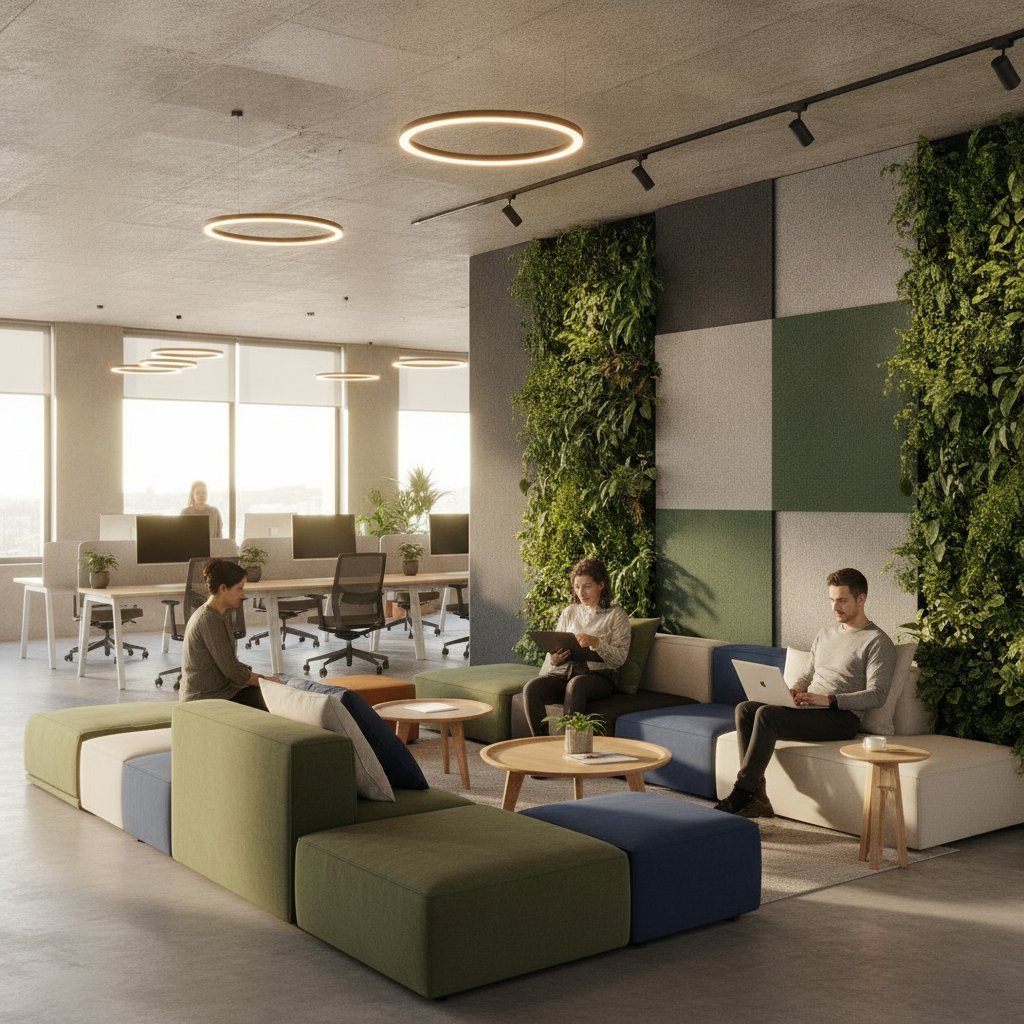
Key Takeaways
Define outcomes, protect operations, and sequence trades. Focus your investment on air, light, sound, and circulation. Document decisions, check quality midstream, and hand off with clear rules-of-use so the space performs on day one.
- Start with discovery and feasibility; lock goals early.
- Use phased, occupied remodels to stay open safely.
- Prioritize low-VOC materials, glare-controlled LEDs, and targeted acoustics.
- Leverage experienced coordination for clean, on-time handoffs.
- Review portfolio proof to validate finish quality before you commit.
Conclusion and Next Steps
The best office remodels solve real work problems and protect day-to-day operations. When goals are clear and trades are sequenced, you get a clean, compliant space that helps people do their best work—without last-minute drama.
Ready to translate this plan into action? Review our office and institutional renovations, skim our build-out coordination article, and browse portfolio finishes at Mehfil and Seven Spice. Then let’s map your phases and get your team into a better space.