

How should you choose kitchen renovations?
Choosing the right approach to kitchen renovations starts before you call contractors. This article gives a practical pre-quote checklist of the decisions that must be settled, a contractor vetting framework you can apply to bids, GTA and Ontario notes, and a ready-to-use comparison template. If you are ready to get a scoped estimate, bring your address, scope, and deadline so a contractor can price and plan your project accurately, as recommended by Deeroi Constructions.
Start here: bring your address, scope, and deadline
To get honest, comparable quotes, supply three facts up front. These let contractors verify site conditions, mark permit needs, and propose realistic schedules.
- Address, so contractors can confirm permit requirements, condo rules, or site access issues and plan logistics.
- Scope, described clearly: are you replacing cabinetry only, changing the layout, or gutting and reframing walls?
- Deadline or target move-in date, so bids show if the timeline is feasible and whether phased work is needed.
Deeroi Constructions asks homeowners for these three items when requesting estimates so the team can price, plan trades, and deliver finished spaces across the Greater Toronto Area and Ontario. Start the process on the Deeroi Constructions website: Deeroi Constructions.
Checklist: decisions to settle before you ask for quotes
A clear decision order reduces delays and extra cost. A kitchen renovation checklist ensures trades do not arrive needing choices you have not made. Experienced planners recommend working the checklist before quoting so you can compare quotes honestly and refuse changes that were not yours to absorb. For a full checklist example see a published kitchen renovation checklist.
Key decisions to make now
- Define the functional layout, including work zones such as prep, cook, clean, and storage. Place the prep zone near the sink and the stove for efficient workflow, a basic planning principle in renovation guides.
- Decide which walls move, or whether the footprint stays the same. Structural changes require engineering and permits and will materially affect cost and timeline.
- Pick major appliances and ventilation, including exact models when possible so contractors can plan electrical and venting. The range hood sizing depends on your cooking habits and room size.
- Choose durable finish levels for cabinetry, countertops, and flooring. For example, quartz countertops and soft-close cabinetry are common choices in Toronto renovations.
- Set a budget range and priorities, then decide trade-offs: more storage, better appliances, or higher-end finishes. Knowing priorities guides every downstream decision and helps keep the project on budget.
- Decide on service level: a partial refresh, a full gut renovation, or phased work that keeps a working kitchen during construction.
Further reading on planning and budgeting is available in Canadian renovation resources: PropertyBlueprint's checklist and RONA's planning guide both explain the order of decisions and budgeting considerations (Kitchen Renovation Checklist, RONA planning guide).
How to vet and compare contractors for kitchen renovations

Choosing the right contractor matters more than selecting finishes, because a general contractor coordinates trades, manages permits, and controls site sequencing. For larger or layout-changing kitchen renovations, many homeowners are better served by a GC who will manage electrical, plumbing, HVAC, and structural trades on one schedule.
Contractor questions and the comparison table columns you should insist on
Ask every candidate the same questions and collect consistent answers to compare bids fairly. Record responses in a spreadsheet with the columns listed below.
- Ask these questions
- Do you provide a written scope that lists included items, allowances, and excluded work?
- Will you obtain permits and handle municipal inspections if required?
- What is the proposed start date and completion window?
- How do you coordinate trades and protect adjacent areas during work?
- What is your standard contingency and how are change orders handled?
- Can you share recent portfolio photos and a relevant project case study?
- What are payment milestones and do you require a deposit?
- Comparison table columns to use
- Contractor name
- Total price and breakdown
- Scope included
- Permits included (yes or no)
- Schedule: start and finish
- Contingency amount
- Warranty and post-completion service
- Portfolio links or photo references
- Payment schedule and deposit
Deslaurier and other renovation advisors recommend a systematic vetting approach for contractors when choosing kitchen renovation partners (Deslaurier contractor selection).
What a reliable kitchen renovations estimate must include
A meaningful estimate breaks costs into trade packages and lists assumptions. Local planning guides advise homeowners to expect line items that reflect demolition and hidden-condition risk, and to compare allowances rather than single lump sums.
Line items to expect and common red flags
- Typical cost buckets
- Demolition and waste removal
- Framing and structural work
- Plumbing and fixture replacements
- Electrical and lighting changes
- HVAC and range hood venting
- Cabinetry and hardware
- Countertops and backsplash
- Flooring and finishing trades
- Permits and inspections
- General contractor fee and project management
- Contingency for hidden conditions
- Common red flags
- Vague scope language such as "all work as required" with no itemized list.
- Missing permit line items when walls are moved or when plumbing or gas work is involved.
- Open-ended hourly allowances for unknown work with no cap.
- No contingency or an unrealistically low contingency for a gut renovation.
Renovation guides for Toronto and the GTA stress that contractors who provide itemized quotes and clear allowances help homeowners make apples-to-apples comparisons. For step-by-step planning and realistic timelines for Toronto kitchens, consult a Toronto renovation guide (RenoHouse Toronto guide and iRemodel planning guide).
What to expect for kitchen renovations in the GTA and Ontario
Local context matters. In the GTA and Ontario you should expect permit checks, potential condo management approvals for multiunit buildings, and variable timelines due to trade availability. Planning resources for Toronto renovations explain that realistic scheduling and local material choices help avoid delays and budget surprises.
If your renovation changes plumbing, gas, or structural elements, plan for permit timelines and inspections. A general contractor can help confirm which municipal or condo approvals apply and include them in the bid, which is a key benefit of hiring a full-service GC for larger projects.
How to reduce surprise costs during demolition and construction
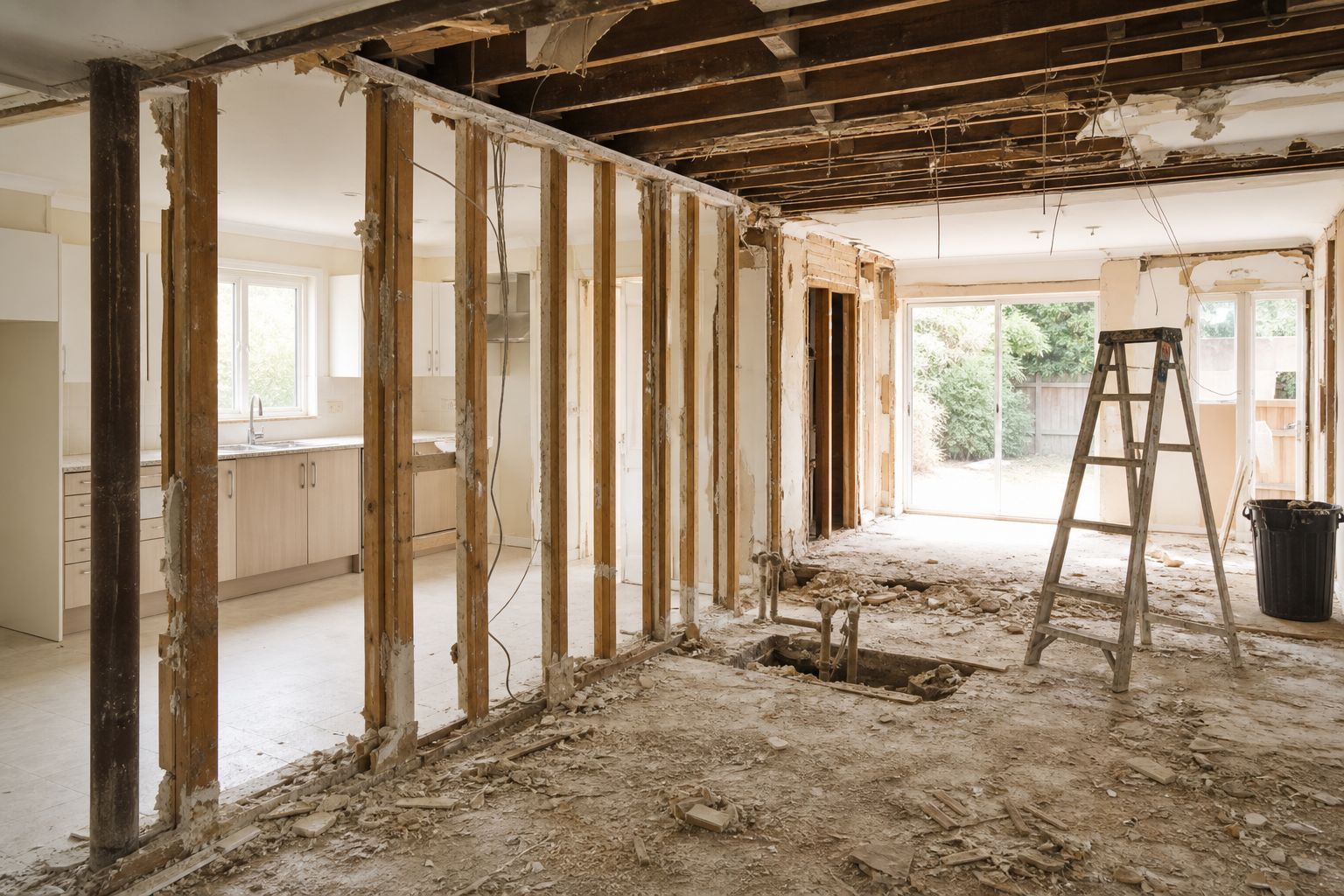
Hidden conditions are the most common source of budget overruns. Use these tactics to limit surprises.
- Pre-demolition inspection, with photos and a documented list of known issues, so the contract captures visible conditions as assumptions.
- Staged demolition, especially in older homes, so trades can confirm conditions before irreversible work proceeds.
- Clear contingency in the contract and a defined change-order process requiring written approvals for scope and price adjustments.
- Waterproofing and vent checks early in the schedule when replacing flooring or appliance connections to avoid rework later.
- Portfolio-based vetting, ask to see similar completed kitchens so finish expectations are realistic before signing.
Following a checklist and using consistent contractor questions reduces the chance that hidden conditions become disputed liabilities. PropertyBlueprint emphasises that the condition behind the walls is the cost you cannot choose after demolition (PropertyBlueprint checklist).
Real objections and decision criteria homeowners use to choose an approach
Homeowners commonly weigh cost, disruption, and schedule. Use this short decision matrix to choose between a partial refresh, a full gut, or a phased renovation.
- Partial refresh, when layout is fine and you want new surfaces and appliances. Pros: lower cost and shorter timeline. Cons: will not fix structural or hidden issues.
- Full gut, when you need layout changes, new utilities, or full replacement of systems. Pros: solves long-term problems and allows modern layouts. Cons: higher cost, more permits, longer timeline.
- Phased renovation, when you need to keep a working kitchen. Pros: less disruption to daily life. Cons: possibly higher total cost and longer calendar time to final completion.
Decide which trade-offs you accept and communicate those priorities to bidders so their proposals match your intent.
Compare bids: a simple template you can use today
Copy these columns into a spreadsheet to compare bidders objectively. Enter the bid amounts and short notes beside each item.
- Contractor name
- Total price
- Scope included, with specific exclusions
- Permits included, yes or no
- Start date and projected finish
- Contingency amount or percentage
- Payment schedule and deposit
- Portfolio examples or links
- Warranty terms and post-completion service
Using this template helps you score bids on the most important dimensions, not just the bottom line. A renovation checklist also helps you compare allowances and finishes rather than one lump-sum price, which is recommended in detailed checklists for Canadian homeowners.
Next steps: get a scoped estimate and compare with this checklist
When you are ready, gather your address, a short scope description, and your target deadline. If you want practical ideas for lower-cost strategies, see Deeroi's kitchen reno on a budget post for tactics you can use to set realistic expectations for finishes and sequencing: kitchen reno on a budget.
For a turnkey general contractor that serves the GTA and Ontario and that offers portfolio-backed proof of finish quality, request an estimate from Deeroi Constructions: Deeroi Constructions.
Frequently asked questions
What decisions should I make before getting a kitchen renovations quote?
Decide the layout, which walls if any will change, the major appliances and ventilation plan, finish level for cabinets and countertops, and your budget priorities. A pre-quote checklist prevents trades arriving before critical choices are made and reduces costly change orders. See a kitchen renovation checklist for a complete decision order.
Do I need a general contractor for a full kitchen renovation?
For larger projects that change layout, plumbing, gas, or structural elements, a general contractor is usually the best option because they coordinate multiple trades, handle permits, and manage sequencing. Renovation advisors recommend a GC for complex or multi-trade work.
How much contingency should I budget for hidden conditions during a kitchen renovation?
Contingency depends on the scope and the home’s age. Guidance commonly suggests a contingency reserve to cover hidden conditions discovered after demolition. Discuss a percentage and a clear change-order approval process with bidders so you avoid surprises.
What should be included in a kitchen renovations estimate?
A reliable estimate lists demolition, trade packages for plumbing and electrical, cabinetry, countertops, flooring, permits, waste removal, GC fees, and contingency. Vague quotes without itemized allowances are a red flag. For Toronto-specific estimate expectations consult a Toronto renovation guide.
How long does a typical kitchen renovation take in the GTA?
Timelines vary by scope. A partial refresh can take a few weeks, while a full gut with layout changes and permits can take several months. Trade availability and permit timing in the GTA affect schedules, so confirm projected start and finish dates with your contractor.
Ready to compare quotes using your checklist and the template above? For portfolio examples and a turnkey approach that includes pricing, planning, and trade coordination across the GTA and Ontario, contact Deeroi Constructions.