A commercial construction project is the end-to-end process of planning, permitting, building, and turning over a code-compliant space for business use. It spans preconstruction through closeout, with defined milestones and responsibilities. For Brampton and Greater Toronto Area owners, strong coordination keeps schedules tight, quality high, and operations on track.
By Deeroi Constructions • Last updated: 2026-06-24
Above-Fold Section: Hook + Table of Contents
Deliver your next commercial build on time by locking scope, permits, trades, and inspections into a clear path. This guide shows how projects move from intake and estimating to a finished, code-compliant space that’s ready for customers or staff.
Owners and operators ask one question: how do we open on schedule without surprises? Here’s how we map a commercial construction project from first call to ribbon-cutting, with examples from restaurants, retail, offices, and institutions across the GTA.
- What is a commercial construction project?
- Why it matters now
- How the process works
- Delivery methods compared
- Best practices
- Tools and resources
- Case studies and examples
- FAQ
- Conclusion
Quick Summary
Commercial projects succeed when scope is clear, drawings are permit-ready, inspections are sequenced, and trades are coordinated to the day. Owners who maintain decision speed and documentation flow see the fewest delays and the cleanest turnovers.
- Plan first: Define address, scope, and deadline early so estimating aligns with reality.
- Design to permit: Drawings and code checks reduce revisions and re-inspections.
- Sequence trades: Schedule structural, MEP, finishes, and inspections in tight handoffs.
- Document everything: RFIs, submittals, and inspection sign-offs keep momentum.
- Close out cleanly: Punchlists, as-builts, and O&M manuals speed occupancy.
What Is a Commercial Construction Project?
A commercial construction project is a coordinated effort to convert drawings and permits into a built environment for business use. It includes preconstruction, procurement, building, inspections, and turnover, all executed to local codes and a defined schedule.
In our experience across Brampton and the GTA, clarity at intake sets the tone. When clients bring the address, scope, and deadline, we translate that into a sequenced plan: pricing, trade coordination, permit strategy, and a day-by-day schedule.
- Project types we deliver: restaurant build-outs, retail fit-outs, bank and office renovations, school and training spaces, plus custom homes and high-finish kitchens and bathrooms.
- Core components: drawings, code analysis, permits, structural work, MEP systems, millwork, finishes, inspections, and closeout documentation.
- Owner outcomes: a safe, durable, and clean space that represents your brand and operates without friction.
For deeper detail on hospitality spaces, see our perspective on restaurant build-outs in Brampton and our commercial build-out contractor guide.
Why a Commercial Build Matters Right Now
Well-run commercial builds protect opening dates, support revenue plans, and reduce rework. In competitive markets, a four-week slip can affect hiring, supplier contracts, and marketing campaigns—so schedule control is business-critical.
Here’s the thing: construction is an operations project with a real launch date. When scope decisions stall, dozens of downstream tasks pause. We’ve found that steady approvals and field-ready drawings generate the fastest progress and fewest punch items.
- Brand experience: Clean finishes, millwork, and lighting influence dwell time and conversion in retail and restaurants.
- Team productivity: Office and institutional layouts drive focus areas, huddle zones, and circulation.
- Compliance first: Code-conscious execution reduces change orders related to accessibility, egress, and life safety.
- Portfolio proof: Our hospitality interiors—like Mehfil Brampton and 7 Spice Brampton—show how design intent meets durable build quality.
How a Commercial Construction Project Works (Step-by-Step)
Successful builds follow a repeatable path: intake and estimating, design-to-permit, procurement, construction, inspections, and closeout. Each phase has clear deliverables—from approved drawings to inspection sign-offs—that unlock the next step.
1) Intake and Estimating
- Scope brief: Address, desired layout, brand standards, and target open date.
- Site reconnaissance: Existing conditions, utilities, structural constraints, landlord criteria.
- Preliminary schedule: High-level durations for drawings, permits, long-lead items, and trades.
- Estimate and options: Line items for structural, MEP, millwork, finishes; alternates for materials or methods.
2) Design to Permit
- Permit-ready drawings: Architectural, mechanical, electrical, plumbing, and life safety sheets coordinated to local code.
- Code checks: Accessibility, egress width and travel, fire separations, ventilation, and sanitary compliance.
- Submittals: Specified fixtures, equipment, and material cut sheets for approval and ordering.
3) Procurement and Mobilization
- Long-lead tracking: Lighting, custom millwork, specialty equipment, and finishes sequenced to install windows.
- Trade buyout: Confirm labor availability so crews are booked against the exact calendar.
- Site setup: Safety plan, dust control, staging, and material delivery routes.
4) Construction and Inspections
- Structure and framing: Demolition, layout, studs, and openings set for doors, windows, and millwork.
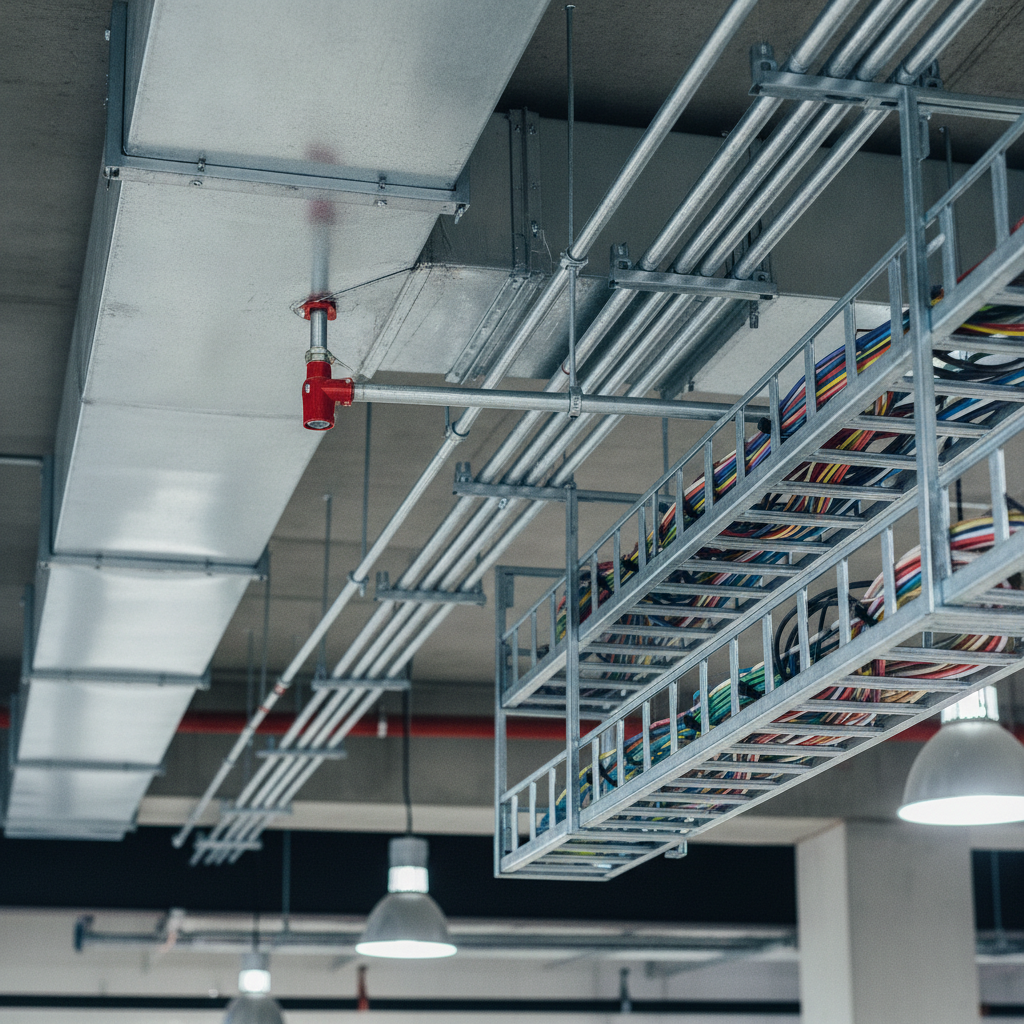
- MEP rough-in: Ductwork, sprinklers, electrical conduit, and plumbing pressure tests.
- Close-in milestones: Inspections approve rough-in so drywall, tile, and ceilings can proceed.
- Finishes: Flooring, paint, lighting, millwork install, specialty equipment set and connected.
5) Turnover and Closeout
- Punchlist burn-down: Rapid cycles to resolve finish items and align to brand standards.
- As-builts + O&M: Final drawings and manuals for future maintenance and operations.
- Training + handoff: Walkthroughs for equipment and controls; final cleaning; occupancy readiness.
When working with clients in Brampton, we maintain a single source of truth for drawings, decisions, and approvals. That documentation spine shortens inspection cycles and helps trades stay in lockstep.
Commercial Delivery Methods (Compared)
Choose a delivery method based on speed, risk profile, and how closely you want design and construction joined. Design-Build accelerates decisions, CM at Risk balances transparency and certainty, and Design-Bid-Build emphasizes competitive bidding.
| Method | Best For | Speed | Risk Profile | Owner Involvement | Example |
|---|---|---|---|---|---|
| Design-Build (DB) | Fast-track restaurant or retail fit-outs | Fast | Single-point accountability | Moderate | Hospitality interiors with custom millwork |
| CM at Risk (CMAR) | Occupied renovations; active schedule control | Fast/Medium | Shared preconstruction transparency | High | Institutional/office phased work |
| Design-Bid-Build (DBB) | Clearly defined scopes; competitive pricing | Medium | Separate designer/contractor responsibilities | Low/Moderate | Retail prototype rollouts |
We often recommend DB for first-time hospitality owners who value speed and a single team. For institutional clients prioritizing transparency and phasing, CMAR offers strong control with collaborative preconstruction.
Best Practices to Keep Timelines Tight
Lock decisions early, protect the schedule with weekly look-aheads, and keep documentation flowing. A tight handoff between design, permits, trades, and inspections prevents idle days and last-minute changes.
Preconstruction discipline
- Decision log: Track owner approvals for finishes, lighting, equipment, and millwork.
- Permit-ready drawings: Design to code so reviews and inspections move faster.
- Long-lead planning: Order lighting and custom millwork in time to meet install windows.
Field coordination
- Weekly look-aheads: Align crews, materials, and inspections 14 days out to avoid gaps.
- MEP coordination: Verify ceiling elevations and clearances before close-in to avoid rework.
- Quality gates: Use mockups and first-in-place checks for tile layouts, paint colors, and millwork seams.
Documentation and risk control
- Single source of truth: Keep current drawings and RFIs in one place so trades build from the latest set.
- Inspection sequencing: Book rough-ins and finals as soon as work is ready to minimize float.
- Change management: If a change is necessary, define it in writing, update drawings, and adjust the schedule.
Our portfolio examples—like Mehfil Etobicoke and 7 Spice Brampton—show how early millwork and lighting decisions translate to crisp fit and finish on site.
Tools and Resources (Owner + Builder)
Use a simple toolkit: a living schedule, decision log, submittal tracker, and inspection calendar. Pair that with brand standards and permit-ready drawings to keep everyone building from the same playbook.
- Owner toolkit: Brand standards, equipment lists, finish schedules, and signage packages.
- Builder toolkit: Master schedule, two-week look-aheads, RFIs/submittals, and a clean set of current drawings.
- Inspection prep: Checklists for rough-in, fire life safety, accessibility, and final occupancy items.
For general process context, see this independent project management overview and a broader architecture and construction guide. For retail refresh ideas, a commercial renovation primer can help owners frame typical scopes.
Local considerations for Brampton and the GTA
- Lead times vary seasonally: Restaurant and retail fit-outs see heavier permit and inspection traffic before summer and year-end; build your two-week look-aheads accordingly.
- Occupied renovations: Offices and schools often require night or weekend work windows—plan material deliveries and noise controls in advance.
- Tenant criteria: Many GTA landlords require submittals for signage, storefronts, and MEP penetrations; align shop drawings with building standards early.
Case Studies and Examples (From Our Portfolio)
Real projects prove the process. Restaurant interiors and institutional renovations show how early decisions, coordinated trades, and inspection sequencing protect opening dates and deliver clean finishes owners can trust.
Hospitality build-outs
- Mehfil Brampton: Dining room, feature millwork, lighting, and finishes aligned to brand standards. See photos in our project portfolio.
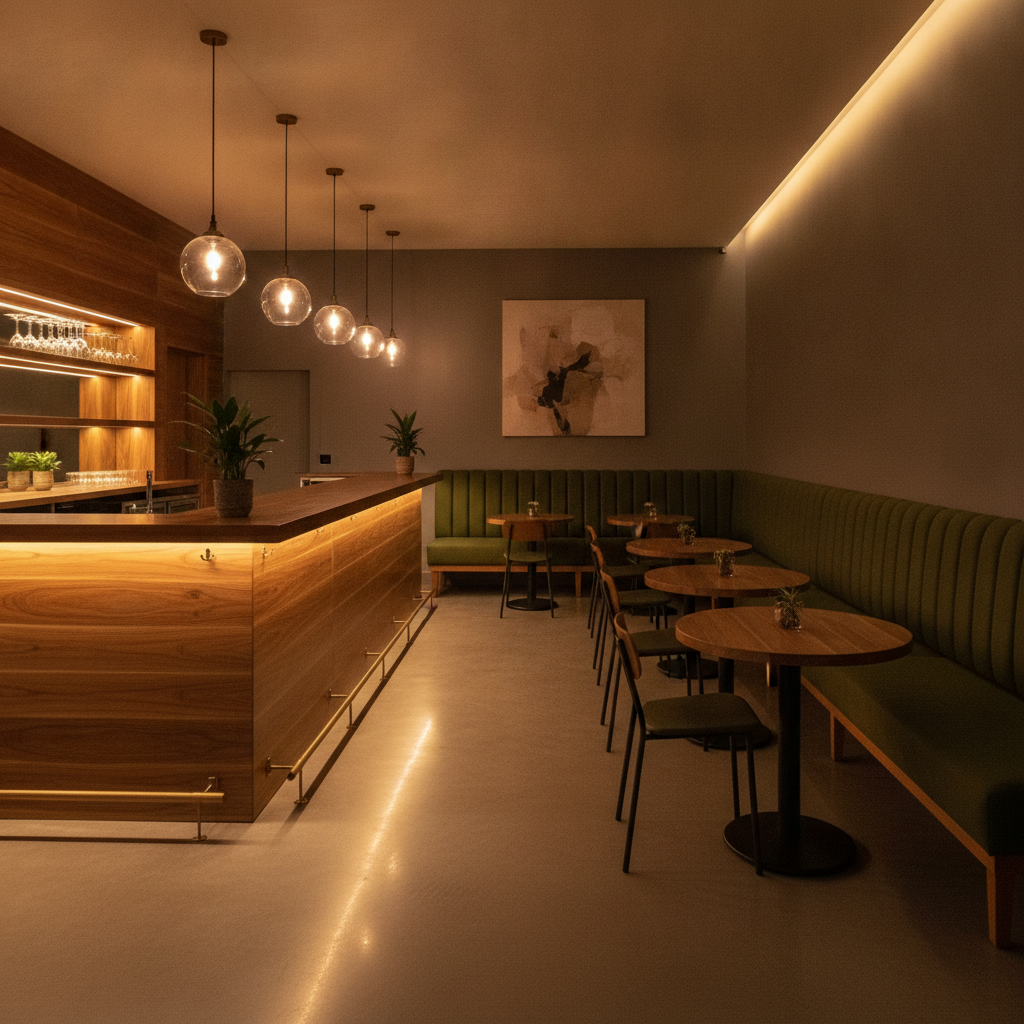
- 7 Spice Brampton: Bar, seating zones, and lighting package delivered with durable finishes for daily service. Explore the 7 Spice project.
- Mehfil Etobicoke: Coordinated MEP, millwork, and final finishes produced a clean turnover; view project images.
Retail, bank, and institutional
- Retail refresh: Phased work to maintain operations while executing new lighting, flooring, and finishes.
- Bank renovations: Security-minded sequencing and clean daytime turnover help minimize branch downtime.
- Training centers and schools: Code-conscious corridors, egress, and classroom fit-outs support safe circulation.
Residential excellence informs commercial quality
- Custom homes and kitchens: High-finish work sharpens our attention to detail in commercial millwork and tile.
- Luxury bathrooms: Waterproofing and glass installs translate to durable, serviceable restaurant restrooms.
- See our homes: Browse examples like a Caledon custom residence for finish quality.
Related Articles in This Construction Cluster
Explore connected guides to go deeper on hospitality build-outs and contractor selection. These pieces expand on scoping, code-conscious execution, and what to ask before you hire.
Planning a new dining concept? Read our take on restaurant build-outs. Shortlisting firms? Our commercial build-out contractors guide explains what to ask about schedules, trades, and inspections.
Frequently Asked Questions
Owners ask about timelines, delivery methods, inspections, and how to reduce change orders. Here are concise answers you can use to plan your next commercial construction project.
What are the main phases of a commercial construction project?
Most projects move through intake and estimating, design-to-permit, procurement, construction with inspections, and closeout. Each phase has deliverables—approved drawings, submittals, and inspection sign-offs—that unlock the next step and keep the schedule moving.
Which delivery method is fastest for tenant improvements?
Design-Build is typically fastest because design and construction run as one team with single-point accountability. For occupied spaces or phased work, CM at Risk offers speed with strong preconstruction visibility and collaborative scheduling.
How do I avoid mid-project changes?
Lock decisions early. Build a decision log for finishes, lighting, and equipment. Ensure drawings are permit-ready and coordinate MEP in ceilings before close-in. Clear documentation and fast approvals reduce rework and last-minute adjustments.
What documentation do I need for a clean turnover?
A clean handoff includes as-built drawings, O&M manuals, inspection sign-offs, and a completed punchlist. Include training on equipment and controls and keep records in a single source of truth for future maintenance.
Conclusion: Your Clear Path to Opening Day
A predictable commercial build comes from disciplined planning, fast decisions, and tight trade coordination. When drawings, permits, inspections, and finishes stay in sync, owners protect opening dates and achieve durable, brand-right spaces.
- Key Takeaways
- Define scope and brand standards early to accelerate permits and purchasing.
- Use weekly look-aheads and inspection calendars to protect schedule.
- Coordinate MEP and finishes before close-in to avoid rework.
- Document decisions, RFIs, and sign-offs to maintain momentum.
- Next steps
- Bring your address, scope, and deadline.
- We’ll map a clear construction path from estimate to turnover.
- See our commercial services and portfolio to validate fit.