Bathroom renovations contractors are licensed professionals who plan, coordinate, and build bathroom remodels from demolition to final inspection. In Ontario’s GTA, reliable contractors manage permits, waterproofing, ventilation, and finishes so homeowners and operators get durable, code-conscious results without schedule chaos—especially useful for ON-based projects.
By Deeroi Constructions • Last updated: 2026-06-15
Above-the-fold: your bathroom game plan
Start with scope, schedule, and must-haves, then hire a bathroom contractor with portfolio proof and a clear trade plan. Align permits, waterproofing, and ventilation early. This upfront clarity shortens timelines, reduces rework, and delivers a cleaner finish you’ll enjoy every day.
You want a calm project and a crisp result. That comes from planning and coordination, not guesswork. Use this guide to map the path before demolition begins.
- In this guide you’ll learn: what contractors actually do, how the process flows, best practices, and how to vet teams.
- Tools you’ll get: questions to ask, checklists to use, and ways to align selections with inspections.
- Who it helps: Ontario homeowners and commercial operators planning bathrooms that must look sharp and last.
- Overview
- What contractors do
- Why experience matters
- Process: step-by-step
- Types and approaches
- Best practices
- Tools and resources
- Codes and inspections
- How to choose
- Pricing factors (no numbers)
- Case studies
Overview: bathroom contractors at a glance
Bathroom contractors coordinate design intent, permits, demolition, rough-ins, waterproofing, finishes, and inspections. The best teams in Ontario’s GTA emphasize code literacy, moisture control, and sequencing—so the tile stays flat, the fan is quiet, and the glass seals cleanly.
Here’s the thing: bathrooms compress plumbing, electrical, moisture, and heat into a small footprint. That complexity raises the stakes. Great work hides in details like slope-to-drain at 1/4 inch per foot, flat substrates for large-format tile (often 12×24 inches or larger), and continuous membranes behind the scenes.
When our crews manage an ON bathroom, we start with scope, plan trade handoffs, and document quality gates. You feel the difference in daily use: warm lighting at the vanity, a fan that actually clears humidity, and grout lines that remain tight.
- Trade coordination reduces idle days and prevents rework.
- Waterproofing integrity and flood tests stop leaks before tile goes in.
- Ventilation sized to room volume curbs fog and mildew growth.
What is bathroom renovation contracting?
Bathroom renovation contracting is professional oversight of scope, permitting, demolition, rough-ins, waterproofing, tile, glass, lighting, and final inspections. One accountable team sequences trades and verifies quality at each step so your bath is safe, durable, and cleanly finished.
Think of your contractor as air traffic control for the remodel. We align plumbers, electricians, tile setters, painters, and glass installers so everything clears the runway at the right time. That’s how you avoid tile lippage, foggy mirrors that never clear, or a door that hits the vanity.
For homeowners, this means simpler communication. For operators upgrading commercial restrooms, it means durable, easy-clean materials that stand up to traffic. Our renovations services show how we fold bathroom scopes into broader residential and commercial work.
- Core responsibilities: scope review, estimating, permitting, scheduling, trade coordination, materials logistics, QC, and closeout.
- Critical systems: waterproofing membranes, slope-to-drain, GFCI protection, bonding, and correct lighting circuits.
- Deliverables: a bathroom that looks great up close and stands up to daily use.
Why experienced bathroom contractors matter
Experienced bathroom renovations contractors reduce risk by sequencing trades, validating membranes and slopes, and sizing ventilation correctly. Their process prevents mold, premature grout failure, and the callbacks that follow.
Mistakes compound quickly in baths. A single missed corner in a shower membrane can wick water behind tile. An undersized exhaust fan lets condensation feed mildew. A proud tile edge can telegraph through grout. We’ve seen all three when we’re called to fix old work.
In our experience across Ontario homes and commercial restrooms, the best results come from simple, disciplined checks. Flood tests hold water for 24 hours before tile; exhaust fan performance is confirmed at the grille; and large-format porcelain (water absorption often under 0.5%) is set over flat, rigid substrates.
For proof, browse our marble washroom upgrade and glass shower suite portfolios. You’ll see tight grout joints, clean glass-to-tile intersections, and hardware aligned to the millimeter.
- Moisture management: continuous membranes, sealed penetrations, and verified drain slope.
- Electrical safety: GFCI outlets and bonded metal where required.
- Finish longevity: flat substrates keep 24-inch tiles level and grout uniform.
- Schedule control: handoffs are pre-booked to avoid idle days.
How the bathroom renovation process works
A reliable remodel follows a fixed sequence: scope and design, permits, site protection, demolition, rough-ins, waterproofing, tile and finishes, inspections, and closeout. Each stage gates the next to protect quality and keep momentum.
Sequencing isn’t red tape—it’s the backbone of a predictable build. When we know what clears each stage, decisions get faster and the punch list gets shorter. Here’s a step-by-step flow you can expect on Ontario projects.
Step-by-step sequence
- Scope + design intent: layout, fixture list, tile sizes, lighting plan, niches, benches, and storage.
- Permits + approvals: verify requirements; confirm condo or landlord rules where applicable.
- Site protection + demo: protect floors and vents, then remove fixtures/finishes.
- Rough-ins: plumbing/electrical to spec; framing for niches, vanities, and curbless entries.
- Waterproofing: membranes at wet zones; flood test showers for 24 hours before tile.
- Tile + finishes: set tile with proper thinset and spacers; install vanity, glass, trims, and lighting.
- Inspections + closeout: pass required inspections; hand over care guides and warranties.
On glass showers, for example, we install and shim tempered panels so weight transfers to the floor, not the wall clips. That’s how seals stay tight and doors close true. See the detailing level in our glass shower suite work.
| Stage | Main crew | Quality gate | Risks mitigated |
|---|---|---|---|
| Design + permits | Estimator, PM | Approved layout + permit | Scope creep, code conflicts |
| Demo + rough-ins | Plumber, electrician | Pressure tests, GFCI plan | Leaks, overloaded circuits |
| Waterproofing | Tile setter | Flood test, full coverage | Mold, tile failures |
| Tile + trim | Tile setter, finishers | Lippage checks, grout cure | Uneven tile, premature wear |
| Closeout | PM, inspector | Inspection passed | Warranty gaps |
Types, methods, and approaches
Most bathroom projects fall into five buckets: cosmetic refreshes, mid-scope upgrades, full gut remodels, accessibility retrofits, and commercial restroom modernizations. The right approach depends on substrate condition, traffic, timeline, and your goals.
Not every bathroom needs a full gut. Sometimes a new vanity, lighting, and paint breathe fresh life into a tight space. Other times, moving a tub to create a walk-in shower requires new rough-ins, a curbless entry, and linear drains. The approach follows the problem you want to solve.
- Cosmetic refresh: new vanity, lighting, mirror, hardware, and minor tile repair.
- Mid-scope upgrade: swap a tub for a shower, update trims, add storage, and improve lighting.
- Full gut remodel: new layout, rough-ins, sheet or liquid membranes, tile, and glass.
- Accessibility retrofit: wider clearances, grab bars, slip resistance, and curbless entries.
- Commercial modernization: touchless fixtures, durable partitions, and easy-clean finishes.
For homes where a kitchen upgrade is also planned, coordinate schedules so trades and inspections stack efficiently. Our kitchen upgrade example shows how cabinet lines and hardware can align across rooms. For commercial operators, our commercial build-out guide explains how restroom specs integrate with brand standards.
Best practices that protect your investment
Prioritize full waterproofing, proper ventilation, flat substrates for large-format tile, and correct slope-to-drain. Validate with flood tests and airflow checks. These practices prevent mold, cracked grout, and callbacks while extending finish life.
Best practices are invisible when they’re done right. You’ll feel them in daily use—less fog, warmer light, quieter fans, and tile that looks laser-straight. We build to these standards whether it’s a family bath or a guest restroom in a busy establishment.
- Waterproofing 360°: continuous membranes in showers, behind niches, and around tubs.
- Ventilation verified: quiet fans ducted outdoors; performance confirmed at the grille.
- Substrate flatness: prep for large-format tolerances; reduce lippage risk on 24-inch tiles.
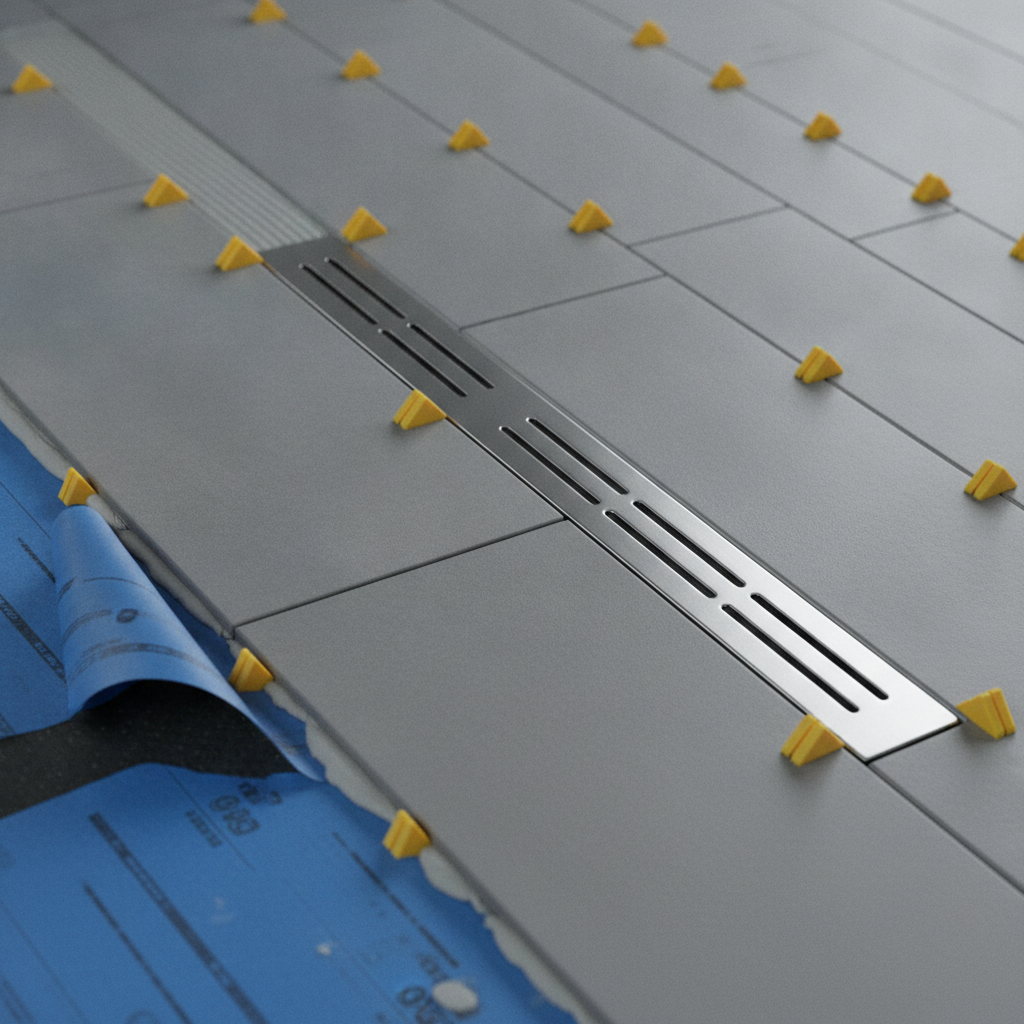
- Slope + drains: consistent pitch (commonly 1/4 inch per foot) to linear or center drains.
- Expansion joints: movement accommodation at perimeters and transitions.
- Quality mortar + grout: appropriate thinset and sealers for porcelain and stone.
If you’re evaluating options, you may find broad planning overviews helpful—such as this kitchen and bathroom renovation primer—but always align advice with your building’s codes and your project’s scope.
Tools and resources (materials, checklists, approvals)
Use a clear selections list, a room-by-room checklist, and documented approvals. Pair proven materials—porcelain tile, waterproofing membranes, GFCI-protected circuits—with a schedule that sequences trades without idle time. Organized inputs produce clean outputs.
Documentation keeps jobsites calm. When fixtures, finishes, and logistics are set, trades move with confidence. That’s how “clean finish” becomes predictable, not hopeful.
- Selections worksheet: fixtures, finishes, grout color, hardware, lighting, mirror sizes.
- Submittals: product data for membranes, drains, glass, lighting, and fans.
- Approvals: condo/landlord sign-offs and permit cards, when required.
- Logistics plan: delivery windows, elevator pads, debris handling, quiet hours.
- QC checklist: flood test results, tile lippage checks, exhaust performance.
We share selections templates during onboarding. It’s part of our simple intake: bring your address, scope, and deadline; we’ll price the work, plan trades, and map the build path. See how we approach broader scopes on our renovations page.
Codes, permits, and inspections
Bathrooms intersect plumbing, electrical, and ventilation codes. Confirm permit needs, size exhaust fans correctly, and vent outdoors. Inspections verify safety measures like GFCIs, bonding, and proper membrane coverage before closeout.
Permits aren’t bureaucracy for its own sake—they protect people and property. In practice, that means rough-in inspections before surfaces close and a final inspection to confirm safety and function. For small cosmetic updates, permits may not be required; your contractor should confirm.
- Permits: expected when moving fixtures, altering electrical, or changing ventilation paths.
- Ventilation: fan sizing is typically tied to room volume; duct to the exterior, not into attics.
- Electrical: GFCI outlets within reach of water; lighting on appropriate circuits.
- Plumbing: approved materials; pressure testing before close-in.
- Inspections: rough-in, membrane/waterproofing, and final sign-offs depending on scope.
If you’re budgeting time, broad planning articles like this Ontario-focused planning overview give non-technical context. We’ll still localize your plan to your building and municipality.
Picking the right bathroom renovations contractors
Choose bathroom renovations contractors with portfolio depth, code-conscious methods, and tight trade coordination. Validate their waterproofing approach, ask about flood testing and ventilation sizing, and confirm who owns scheduling risk.
You might be wondering, “How do I know who’s real?” Process clarity is the tell. Great teams can explain slope, membranes, and sequencing in plain English—no jargon fog. They’ll also show similar projects, not just pretty pictures from elsewhere.
Questions that reveal true capability
- Show three recent bathrooms with large-format tile and frameless glass.
- Walk through your waterproofing system and flood testing cadence.
- How do you size and vent the exhaust fan to the outdoors?
- What’s your plan for substrate flatness and lippage control?
- Who manages trades and signs off each stage before proceeding?
For commercial operators, tie choices to brand standards and cleaning routines. We cover restroom integration with operating hours in our restaurant build-outs article.
Bathroom renovation pricing factors (without numbers)
Bathroom investment depends on scope intensity, layout changes, membrane coverage, tile complexity, glass, electrical upgrades, and site logistics. Request an itemized scope and timeline; clarity on inclusions and exclusions prevents surprises later.
We never publish prices because bathrooms vary widely by layout, materials, and building rules. That said, you can control the drivers. Decide early which upgrades are must-haves and which are nice-to-haves. Group decisions by surface: floor, shower, vanity, lighting, and paint.
- Scope intensity: cosmetic refresh vs. full gut with reconfiguration.
- Material choices: porcelain vs. stone, custom vanities, and glass specs.
- Complexity: niches, benches, heated floors, and linear drains add steps.
- Electrical upgrades: new circuits for lighting, fans, and heated floors.
- Site factors: condo delivery rules, elevator time, debris handling, quiet hours.
For additional planning perspective, see this broad bathroom remodeling overview. Then, let’s tailor the plan to your home or facility.
Case studies and examples
Real projects prove process. From luxury home bathrooms to high-traffic commercial restrooms, coordinated scopes—clear selections, sequenced trades, and documented QC—deliver clean lines and durable finishes that hold up over time.
We balance design and durability across Ontario projects. That shows up in subtle ways: grout lines that meet hardware centers, mirrors aligned to tile courses, and fans that quietly clear humidity. Here are example scenarios similar to what we build.
- Primary bath transformation: full gut; walk-in shower with linear drain; floating vanity; large-format porcelain. Result: brighter, easier cleaning, verified waterproofing.
- Condo bath refresh: building approvals, quiet hours, elevator pads. New tub-shower combo, stacked tile, updated lighting. Result: on-spec finishes, no neighbor complaints.
- Commercial restroom modernization: touchless fixtures, easy-clean partitions, anti-slip tile. Result: shorter cleaning cycles and better guest feedback.
Planning whole-home work? We often align baths with kitchens or additions so trades stack efficiently. See a custom home upgrade example and our house-wide renovation to understand finish continuity. If you’re exploring future custom homes in Toronto, the same finish-discipline applies across the entire build.
Local considerations for ON
- Plan ventilation to exhaust outdoors to handle cold-season humidity spikes common in Ontario climates.
- Build around winter lead times—tile and glass supply can run longer during peak renovation months.
- For condos and leased spaces, book elevators and confirm debris routes before demolition begins.
Talk to a coordinated bathroom team
If you’re planning a bathroom in Ontario or the GTA, bring your address, scope, and target date. We’ll price the work, plan the trades, and map a clear path from idea to a finished, code-conscious space.
Free planning call: Share your scope and timeline. We’ll outline permits, sequencing, and a selections checklist so you can move forward with confidence.
Explore a recent bath finish standard on our portfolio page.
Tools and materials deep dive
Select materials for performance first, then aesthetics. Porcelain tile, proven waterproofing membranes, quality thinset, and quiet, efficient exhaust fans create a stable foundation for any design style.
Material choices dictate the installation method. Large-format porcelain needs flat substrates and correct mortar coverage; natural stone wants the right sealer and movement joints; frameless glass wants solid blocking and clean, silicone-sealed edges. The right choices make installation faster and results cleaner.
- Tile systems: large-format porcelain with leveling spacers and movement joints to limit cracking.
- Waterproofing: sheet or liquid membranes, fully integrated with drains and niches; corners sealed.
- Glass: tempered, properly shimmed to carry weight to the floor; seals aligned to tile courses.
- Lighting: task lighting at vanities, dimmable ambient, and sealed trims in wet zones.
- Ventilation: quiet fans ducted outdoors with backdraft dampers; performance checked at the grille.

Delivery models compared
General Contractor, Design–Build, and Owner-coordinated specialty trades are the common delivery models. For most bathrooms, a single accountable contractor coordinating all trades offers the clearest path, fastest decisions, and stronger warranties.
Choosing a delivery model sets communication lines for the whole project. Most homeowners and small operators prefer one accountable team. It reduces handoffs and eliminates finger-pointing when the schedule gets tight.
| Model | Who coordinates | Pros | Watch-outs | Best for |
|---|---|---|---|---|
| General Contractor | GC project manager | Single point of accountability; tight sequencing | Needs clear scope to price accurately | Most residential + small commercial |
| Design–Build | In-house team | One team from concept to completion | Late design changes can affect schedule | Complex reconfigurations |
| Specialty trades | Owner coordinates | Direct control of each trade | Higher risk of gaps and delays | Very small cosmetic updates |
How baths integrate with whole-home and commercial work
Bathrooms connect to bigger plans. In homes, align bath upgrades with adjacent kitchen or flooring timelines. In commercial settings, tie restroom work to operating hours, cleaning cycles, and brand standards for materials and colors.
Integration saves time. If your home is getting a kitchen upgrade, share cabinet lines, hardware finishes, and lighting temperatures across rooms. For commercial spaces, coordinate partitions, touchless fixtures, and tile slip ratings with daily traffic and cleaning routines.
See how we manage whole-home scopes in our house-wide renovation. For brand-led environments, we adapt restroom finishes to match broader palettes we’ve implemented in retail and restaurant projects across the GTA.
Frequently Asked Questions
Homeowners and operators often ask about permits, timelines, material choices, and contractor vetting. Here are direct answers to the most common bathroom questions.
Do I need a permit for a bathroom renovation?
If you’re changing plumbing or electrical, moving walls, or altering ventilation, expect to pull permits. Cosmetic-only updates may not require one. Your contractor should confirm requirements and coordinate inspections.
What’s the most important step for a long-lasting shower?
Waterproofing and slope-to-drain are critical. Continuous membranes, properly sealed corners, and a verified flood test prevent leaks and mold, protecting grout lines and the structure behind the tile.
How do I vet bathroom renovations contractors?
Ask to see recent bathrooms with similar materials, then request a written process for waterproofing, ventilation, and inspections. Confirm who schedules each trade and how progress is approved at every stage.
Can you work in condos or leased spaces?
Yes—expect building approvals, quiet hours, and elevator bookings. A well-prepared contractor coordinates deliveries, debris routes, and inspections with property management to keep neighbors happy.
Key takeaways
Successful bathrooms balance design and durability. Hire for coordination and code literacy, insist on complete waterproofing and proper ventilation, and keep selections and approvals organized—that’s the path to a cleaner finish.
- Hire for portfolio depth and trade coordination.
- Waterproofing, substrate prep, and airflow determine longevity.
- Approvals and logistics prevent avoidable delays.
Conclusion and next steps
Bring your address, scope, and target date. We’ll price the work, plan the trades, and deliver a clean, code-conscious bathroom—on a predictable path from idea to inspection sign-off.
- Document your must-haves and nice-to-haves by surface.
- Collect two or three inspiration images per area (tile, vanity, lighting).
- Book a planning call so we can align scope, timeline, and approvals.