Kitchen renovation contractors are licensed builders who plan, coordinate trades, secure permits, and deliver code-compliant kitchen remodels. In ON and across Ontario and the GTA, Deeroi Constructions manages cabinetry, electrical, plumbing, and finishes from scope to final walkthrough. The right contractor prevents delays, reduces rework, and leaves a durable, clean finish.
By Deeroi Constructions • Last updated: 2026-06-14
Your kitchen, built right: the complete contractor guide
This guide shows how to choose, vet, and work with kitchen renovation contractors so your remodel finishes on time, passes inspections, and looks great for years. You’ll learn the process, codes, materials, checklists, and how Deeroi Constructions delivers coordinated, code-conscious work across Ontario and the GTA.
Many homeowners start with inspiration but stall on permits, schedules, and trade coordination. Here’s how to turn a vision into a finished space without roadblocks.
- What a kitchen renovation contractor actually does
- How projects run, from scope to punch list
- How to evaluate bids, references, and portfolios
- Code, ventilation, waterproofing, and inspection essentials
- Design and material choices that stand up to daily use
- Real GTA examples from Deeroi’s portfolio
What is a kitchen renovation contractor?
A kitchen renovation contractor plans the remodel, coordinates licensed trades, secures permits, meets building codes, and delivers the finished kitchen. They manage scheduling, materials, inspections, and quality control so cabinetry, electrical, plumbing, and finishes align seamlessly.
Think of the contractor as your project quarterback. They translate your scope into drawings, line up trades, order long-lead materials, and set a clear build sequence that respects codes and inspections.
Core responsibilities
- Scoping and planning: Convert ideas into a buildable plan and schedule.
- Permits and inspections: Prepare permit packages; coordinate rough-in and final inspections.
- Trade coordination: Align electricians, plumbers, tilers, painters, and millwork installers.
- Quality control: Verify specs, elevations, tolerances, and finish standards.
- Closeout: Deliver punch list completion and handover documentation.
Why Deeroi fits this role
- Code-conscious execution: Workflows built around local code requirements and inspection cycles.
- Clean finishes: Millwork, tile, and lighting installed to tight tolerances.
- Coordinated trades: A proven process to keep specialists sequenced and productive.
- Portfolio proof: View our kitchen upgrade case study before you decide.
Why the right contractor matters
The right kitchen renovation contractor prevents schedule slips, change-order spirals, and finish defects. With tight planning, code-aware sequencing, and documented inspections, your project stays predictable and your new kitchen performs for years.
Small misses compound. A late cabinet delivery can push templating, which delays counters, which delays plumbing hookup. A skilled contractor buffers lead times and keeps each milestone on track.
Risks when the choice is wrong
- Rework cascades: Misaligned lowers mean counters won’t sit flat; backsplash and outlets drift.
- Inspection fails: Rough-in issues discovered late force tear-outs.
- Trade conflicts: Electricians and plumbers stepping on each other’s time windows.
- Poor durability: Grout cracking, cabinet racking, or premature finish wear.
Signals you picked well
- Clear path to completion: A written plan with milestones, inspection points, and dependencies.
- Portfolio depth: Kitchens plus adjacent spaces (bathrooms, built-ins) show finish consistency. See our bathroom upgrade example.
- Coordinated trades: One accountable lead scheduling specialists to exact specs.
How kitchen projects actually run (step-by-step)
Kitchen projects flow through scoping, design, permitting, rough-ins, installation, and closeout. Each phase has clear deliverables: drawings, approvals, inspections, and punch lists. Strong sequencing avoids idle time and protects finish quality.
Standard sequence
- Scope & site review: Document existing conditions, dimensions, and mechanicals.
- Design & selections: Layouts, cabinet specs, appliances, counters, backsplash, lighting.
- Permits: Submit for structural, electrical, and plumbing as required.
- Demo & preparation: Protect floors; selective demolition; framing adjustments.
- Rough-ins: Electrical circuits, boxes, and plumbing supply/drain rework.
- Insulation & drywall: Moisture-rated boards in wet zones; seams finished.
- Cabinetry & millwork: Install boxes level and plumb; set panels and fillers.
- Countertops & tile: Template counters; set backsplash on flat substrate.
- Lighting & fixtures: Place task, ambient, and accent sources; install faucets and hardware.
- Finals & handover: Inspection sign-offs; punch list closed; care instructions provided.
Process table
| Phase | Primary Goal | Typical Outputs |
|---|---|---|
| Planning | Define scope and schedule | Scope sheet, drawings, selections log |
| Permitting | Obtain approvals | Permit set, inspection plan |
| Rough-in | Ready for close | Electrical/plumbing inspections passed |
| Finishes | Install visible elements | Cabinetry, counters, tile, lighting |
| Closeout | Deliver completed space | Punch list, care guide, warranties |
Deeroi’s approach is to “bring address, scope, and deadline; we plan the path and deliver the space.” That clarity keeps decisions front-loaded and site work efficient.
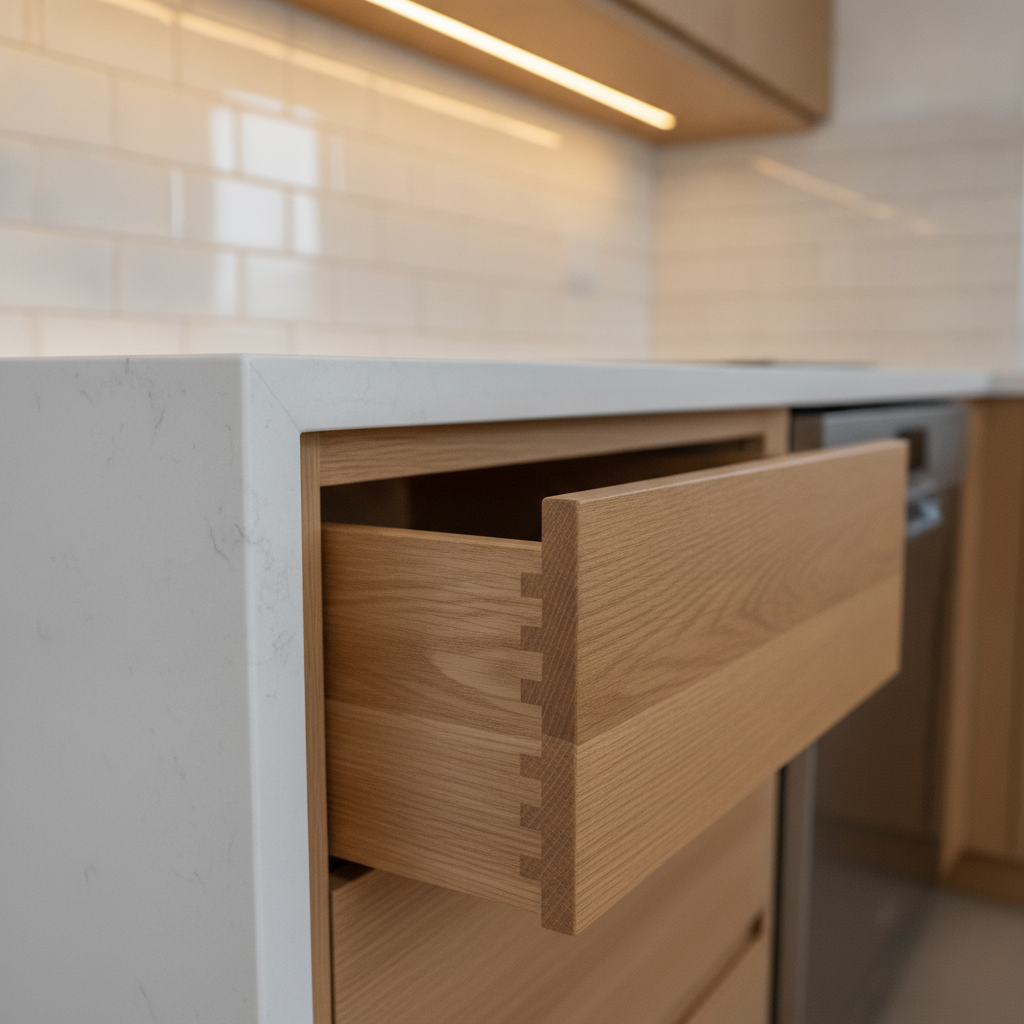
Types of kitchen remodels and approaches
Kitchen projects range from layout-preserving refreshes to full-gut reconfigurations. Choosing the right approach depends on mechanical moves, appliance upgrades, and structural changes. Clear scope prevents surprises and keeps inspections predictable.
Common project types
- Refresh: New counters, backsplash, lighting, and hardware with existing cabinets.
- Cabinet replacement: New boxes and doors; layout mostly unchanged.
- Layout rework: Move plumbing or electrical; add an island; widen clearances.
- Full gut: Strip to studs; reframe as needed; new mechanicals and finishes.
Scope checkpoints
- Appliance loads: Induction ranges and built-in ovens may require new circuits.
- Ventilation path: Plan exterior venting early to prevent rerouting later.
- Waterproof zones: Sinks and dishwashers need robust substrate and sealants.
- Lighting layers: Blend task, ambient, and accent for usable, comfortable light.
For inspiration that balances function and finish, explore our residential Vaughan house upgrade and custom-home work like the Caledon custom residence.
How to evaluate kitchen renovation contractors in Ontario
Vet contractors by portfolio depth, references, clear schedules, and code-savvy planning. Insist on written scopes, trade sequencing, inspection plans, and finish standards. Strong candidates show kitchens plus related spaces, and provide site-ready drawings with measurable tolerances.
Vetting checklist
- Portfolio proof: Kitchens with tight tile lines and level counters; see our kitchen upgrade.
- Process clarity: A one-page project roadmap with milestones and inspections.
- Trade plan: Named electricians, plumbers, tilers, and millworkers with schedules.
- Documentation: Drawings, elevations, specs, and a selections log.
- References: Recent clients who can speak to schedule and cleanliness.
Interview questions that reveal quality
- “How do you handle long-lead items?” (Look for proactive ordering and buffer windows.)
- “What inspections do you plan for this scope?” (Expect rough-in and final at minimum.)
- “How do you confirm cabinets are plumb and level?” (Laser levels, shims, tolerance targets.)
- “What’s your punch list process?” (A dated list, tracked to completion before handover.)
Local considerations for ON
- Plan around winter deliveries and snow; protect floors and entries to keep sites clean.
- Holiday periods can slow inspections; build buffer time near year-end or long weekends.
- Older GTA homes may have legacy wiring or plumbing; allow time for safe upgrades.
Design, materials, and building-code essentials
Design well, specify durable materials, and plan for code. Kitchens need dedicated circuits, GFCI protection near water, compliant clearances, proper ventilation, and moisture-smart substrates. Upfront coordination avoids failed inspections and protects finish quality.
Design basics that drive function
- Work zones: Prep, cook, clean, and storage areas reduce congestion.
- Clearances: Comfortable aisle widths and door swing planning prevent collisions.
- Lighting layers: Under-cabinet task lighting makes counters safer and brighter.
Material choices that last
- Cabinetry: Plywood boxes with quality hardware resist racking and sag.
- Counters: Durable surfaces with finished edges; template accuracy matters.
- Tile & grout: Flat substrates and proper grout type prevent cracking and stains.
Code-aware planning
- Electrical: Dedicated appliance circuits and GFCI/AFCI protection where required.
- Plumbing: Proper venting, slope, and secure connections at sinks and dishwashers.
- Ventilation: Exterior venting sized for the cooktop; short, sealed duct runs.
- Moisture control: Use moisture-resistant boards near sinks and water lines.
For additional homeowner reading, you can review an industry-focused contractor guide and a general overview of kitchen and bath renovations. If your scope includes refacing options, see this cabinet refacing guide.

Best practices when working with your contractor
Lock decisions early, confirm measurements twice, and protect the schedule. A clear selections log, weekly site updates, and documented inspections help your kitchen finish strong without surprises.
Owner actions that keep projects smooth
- Front-load decisions: Cabinets, appliances, counters, tile, and fixtures chosen before demo.
- One source of truth: A selections log with model numbers, finishes, and delivery ETAs.
- Weekly cadence: Short check-ins to review progress and unblock decisions.
- Protection plan: Entry mats, floor protection, and dust control from day one.
Contractor collaboration
- RFI discipline: Questions recorded and answered in writing.
- Photo documentation: Pre-close wall photos for future maintenance.
- Punch list rigor: Items logged with dates and completion notes.
Our renovations page outlines this approach across homes and institutions—see how we coordinate trades on renovations and deliver consistent finishes.
Tools, resources, and templates you can use
Use simple checklists and logs to stay organized. A scope sheet, selections log, inspection tracker, and punch list eliminate guesswork and keep your contractor aligned.
Practical documents
- Scope sheet: Lists all work items by trade with notes on dependencies.
- Selections log: Tracks SKUs, finishes, quantities, and delivery windows.
- Inspection tracker: Records rough-in and final sign-offs.
- Punch list: Captures items to complete before handover.
Where these fit in the process
- Scope sheet clarifies bids and prevents gaps.
- Selections log drives ordering and reduces change friction.
- Inspection tracker protects walls from premature close-ups.
- Punch list speeds closeout and warranty handoff.
Soft CTA: Want a quick planning session? Book a no-pressure call and we’ll align scope, trades, and schedule based on your address and deadline. Explore our kitchen portfolio to see finish standards first.
Mini case studies from our GTA portfolio
Deeroi Constructions showcases residential kitchens and adjacent spaces across the GTA. These examples highlight code-aware sequencing, clean finishes, and durable details that hold up to daily use.
Residential depth
- Kitchen upgrade: See precise tile lines and millwork integration in our kitchen upgrade.
- Whole-home context: Consistent finishes across spaces in the Vaughan house upgrade.
- Custom-home execution: Fixtures and built-ins coordinated in the Caledon custom residence.
Commercial precision, residential benefit
- Restaurant craftsmanship: Feature walls and millwork tolerances at Mehfil Etobicoke carry over to kitchens.
- Finish durability: Commercial-grade thinking informs grout choice, sealants, and lighting layouts.
Commercial rigor plus residential attention to detail is the combination most homeowners want—precise, durable, and beautiful.
Frequently asked questions
These concise answers address the most common questions homeowners ask about hiring kitchen renovation contractors in the GTA and Ontario.
What does a kitchen renovation contractor handle?
They plan the remodel, coordinate trades, secure permits, and manage inspections. Expect them to schedule electricians, plumbers, and millworkers; verify measurements; and deliver a finished kitchen with a documented punch list.
How do I judge a contractor’s quality?
Start with portfolio detail, not just sweeping shots. Look for level counters, tight grout lines, aligned outlets, and straight upper runs. Ask for recent references and a written schedule with inspection checkpoints.
Do I need permits for a kitchen remodel?
If you change electrical, plumbing, structure, or ventilation paths, permits and inspections are typically required. Your contractor prepares the application, coordinates inspections, and ensures code compliance.
What keeps a project on schedule?
Front-loading decisions, ordering long-lead materials early, and holding weekly check-ins. A selections log, inspection tracker, and clear milestone dates prevent gaps and idle time.
Next steps and key takeaways
Choose a contractor with portfolio proof, a written plan, and code-savvy sequencing. Document decisions, track inspections, and keep a steady communication cadence to finish strong.
Key takeaways
- Kitchen renovation contractors coordinate trades, permits, and inspections so your project stays predictable.
- Written scopes, selections logs, and inspection trackers prevent change friction.
- Portfolio depth across kitchens and adjacent spaces signals finish quality.
- Weekly, time-boxed check-ins keep work flowing and decisions timely.
Ready to plan? See our kitchen work, explore broader renovations, and then share your address, scope, and deadline. We’ll map a clean, code-conscious path to your new space.