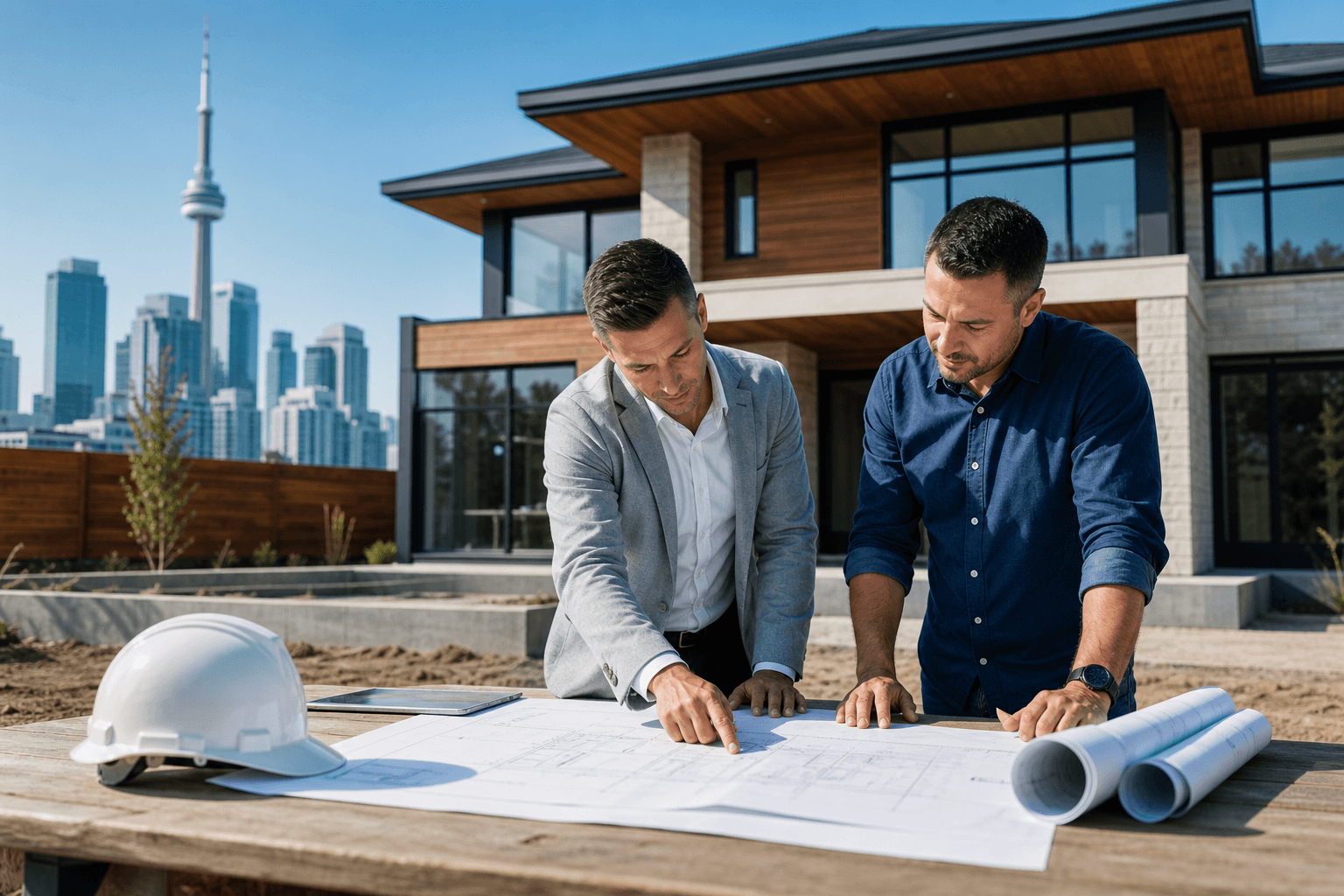

7-point checklist to choose a custom home builder in Toronto
If you are shortlisting custom home builder Toronto candidates, use this seven-item checklist to compare them on facts you can verify. The checklist covers portfolio proof, Ontario permit and code handling, contract clarity and change orders, transparent budgets, realistic schedules and trade coordination, communication and personal fit, plus warranty and closeout items to require before you sign. Each numbered section gives concrete questions to ask and short verification steps you can do this week.
1. Portfolio and finished-build proof: confirm workmanship for comparable custom homes
Start by confirming the builder has recent, completed projects similar in scale and finish to your plan. Review project photography and labelled case studies, then verify those builds with three practical steps: request site references for completed homes, ask for before-and-after details that show workmanship, and visit one completed home to inspect finishes in person. A local contractor portfolio that includes residential projects will help you judge finish quality against your expectations (Deeroi Constructions).
What to inspect in photos and on site
- Trim and joinery: look for tight mitres, consistent reveals and aligned hardware.
- Wet-room details: visible waterproofing at shower thresholds, sealed tile edges and properly flashed glazing.
- Finish consistency: uniform paint, level countertops and neat tile grout lines.
When you contact references, ask these specific questions: Was the schedule met for major milestones? Were there unexpected costs and how were they handled? Did the builder rectify defects promptly during warranty? Honest answers to those questions reveal how the builder manages issues after the contract is signed. Independent consumer checklists also recommend treating portfolio fit as a primary filter when creating your shortlist (Urban Splatter).
2. Licensing, permits and Ontario code handling: what records to request
Ontario custom homes require municipal permits and staged inspections. Before you commit, ask the builder to supply permit numbers and examples of inspection sign-offs from similar projects. This confirms they understand local code requirements and municipality processes. Keep copies of permit approval letters and final inspection results in your project file to reduce legal and scheduling risk. Legal checklists for new construction in Ontario advise tracking permits and inspection milestones throughout the build (LD Law).
Documents and confirmations to request
- Copies of municipal permit numbers and major inspection sign-offs for past comparable projects.
- Written statement identifying who will submit permit applications, who pays permit fees, and which permits are expected for your build.
- Examples of coordination with local inspectors when complex issues arose, so you know the builder has handled municipal interactions before.
If the builder cannot produce a permit number for recent work, treat that as a warning sign and ask why. Confirming permit handling early avoids costly stop-work orders or delayed occupancy later in the project.
3. Contract scope, allowances and change-order rules: require clarity in writing

A clear written contract prevents most disputes. Insist that each quote include a defined base scope, line-item allowances with selection deadlines, and a formal change-order process that documents costs, approvals and schedule impacts. Ontario legal guidance recommends tracking contract amendments carefully and ensuring the contract explains how changes are priced and approved (LD Law).
Essential contract items
- Detailed scope of work that references drawings and specifications, not just a paragraph summary.
- Itemised allowances for cabinetry, flooring, tile and fixtures, with quantities and deadlines to make selections.
- Standard change-order template that requires homeowner sign-off, shows the incremental cost, and lists any schedule impact.
- Payment schedule tied to measurable milestones, with retention terms for incomplete items.
When comparing bids, normalise allowance items so you can compare like for like. If one builder leaves allowances vague, ask them to itemise selections and pricing methods before you sign.
4. Budget transparency and allowances: compare apples to apples
Ask builders to present estimates in the same structure: base scope, listed allowances, and a separate contingency line. Preconstruction advice recommends preparing your high-level budget and material priorities so builders return comparable estimates (Preconstruction checklist).
Three decision criteria for comparing estimates
- Total price after allowances, including explicit examples of how allowance overruns are handled.
- Clarity and completeness of line items, so you know which trades and tasks are included.
- How the contingency is handled and when it is drawn down, to avoid hidden buffers that mask missing scope.
Sample questions to obtain consistent pricing: Which exact fixtures and appliances are covered by each allowance? How are allowance overruns approved and invoiced? If the builder recommends a contingency, ask them to explain typical uses and past examples where the contingency was applied. A transparent budget conversation reduces surprises and strengthens negotiation.
5. Schedule, trade coordination and milestones: what good reporting looks like

A realistic schedule shows major milestones and trade sequencing, not just a target completion date. Ask for milestone dates such as permit pull, foundation, framing completion, roofing, mechanical rough-ins, drywall, finishes and the pre-delivery inspection. Good builders organise trades around fixed milestone windows and provide regular reporting so delays are visible early.
Reporting cadence and schedule features to expect
- Weekly short updates during active trade phases, and milestone reports at major transitions.
- Named project manager and site supervisor with contact details for day-to-day approvals.
- Flags for long-lead items such as custom millwork, appliances and glazing, with order deadlines to avoid schedule slippage.
Request examples of recent schedules and ask references whether the builder met key milestones. Builders that price and plan trades as a single process typically reduce coordination friction and give clearer milestone dates (Deeroi Constructions).
6. Communication, project management and personal fit: test the working relationship
Building a custom home is a months-long collaboration, so personal fit matters. Consumer guidance from CMHC emphasises the importance of open communication and a working relationship you can sustain through decisions and trade-offs (CMHC).
Short interview script and evaluation checklist
- Ask who will be the day-to-day contact and request a recent homeowner reference you may phone.
- Rate responsiveness during the precontract period. Did the builder return messages within one business day?
- Ask how urgent decisions are escalated on site, and who signs approvals for change orders.
- Confirm local presence in the GTA or Brampton if municipal interactions and quick site visits matter to you.
Personal rapport, clear escalation paths and prompt communication reduce friction on design choices and selection deadlines. If you do not feel comfortable with the project manager during early meetings, consider that a weighty factor in your decision.
7. Warranty, PDI and aftercare: verify handover and post‑occupancy support
Before you sign, request the warranty and closeout packages the builder provides at possession. Ontario new-build checklists urge buyers to track warranty items and pre-delivery inspections so closeout issues are documented and resolved (LD Law). A clear PDI and warranty process reduces ongoing maintenance disputes after you move in.
PDI checklist highlights and final confirmations
- Inspect mechanical systems, HVAC function and service documentation.
- Verify electrical outlets, lighting, switches and labelled panels.
- Check roofing, flashing and exterior weathertightness, plus final site grading.
- Confirm tiling, glazing and waterproofing in wet rooms, and check cabinetry hardware and finishes.
- Receipt of documented PDI notes and a list of outstanding rectification items with target completion dates.
- Written warranty terms and a clear contact method for post-occupancy service requests.
Frequently asked questions
How can I verify a builder actually pulled the municipal permits for my Toronto build?
Request the permit numbers and then call or check the municipal building department online to confirm status and inspection history. Keep copies of permit approval letters and inspection sign-offs in your project file; legal checklists for Ontario recommend tracking these records throughout construction (LD Law).
What specific clauses should a custom home contract in Ontario include to control change orders?
Insist on a written change-order process that requires homeowner approval, shows the added cost and the schedule impact, and references a signed template for each change. The contract should also list allowances, selection deadlines and who pays for delays attributable to late homeowner decisions (LD Law).
How much contingency should I budget for a custom home in the GTA?
Contingency depends on project complexity and how complete your selections are at contract time. Rather than a fixed number, ask each builder to show the contingency as a separate line and explain how it is applied. Preconstruction checklists show that transparent contingency and clear allowance descriptions let you compare bids fairly (Preconstruction checklist).
What questions should I ask during the pre-construction meeting to test trade coordination and schedule realism?
Ask for the milestone schedule, the usual trade sequence for your project type, how long selections take to order and deliver, and how the builder manages overlapping trades on tight urban sites. Request examples of recent schedules and ask a reference whether the builder met key milestones (Preconstruction checklist).
What should a practical PDI checklist include before possession day in Ontario?
Check mechanical systems and HVAC, electrical outlets and lighting, roofing and flashing, doors and windows, tiling and waterproofing in wet rooms, cabinetry and finish hardware, and final site grading. Keep PDI notes and require the builder to supply a schedule to complete outstanding items before you accept final possession (LD Law, CMHC homebuyer guide).
Key takeaway: use these seven checks as decision gates. When builders provide clear permit records, a transparent contract and allowances, comparable budgets, a milestone schedule, verifiable portfolio proof, responsive project management and a defined PDI and warranty process, you reduce risk and have a stronger basis for selecting who will build your custom home in Toronto.
Contact: Deeroi Constructions - request a quote by bringing your address, scope and deadline to start the intake and estimating process.