7 Commercial Contractor Mistakes to Check in the GTA
Choosing a commercial contractor in the GTA involves more than comparing headline prices. A useful comparison tests relevant experience, trade coordination, scope clarity, code-conscious planning, finish quality, pricing assumptions, and communication.
These checks apply to restaurant renovations, retail spaces, banks, offices, schools, training centres, and other commercial build-outs. They can help you identify gaps before requesting a construction estimate or selecting a contractor.
1. Choosing a contractor without relevant commercial experience
A contractor may have general construction experience without having the right background for your particular space. Restaurant renovations, retail units, banks, offices, schools, and training centres can involve different operational priorities, finish expectations, and coordination needs.
Ask to see completed projects that are reasonably comparable to yours. Consider whether the contractor has worked with the type of space, level of finish, integrated elements, and coordination your plan requires.
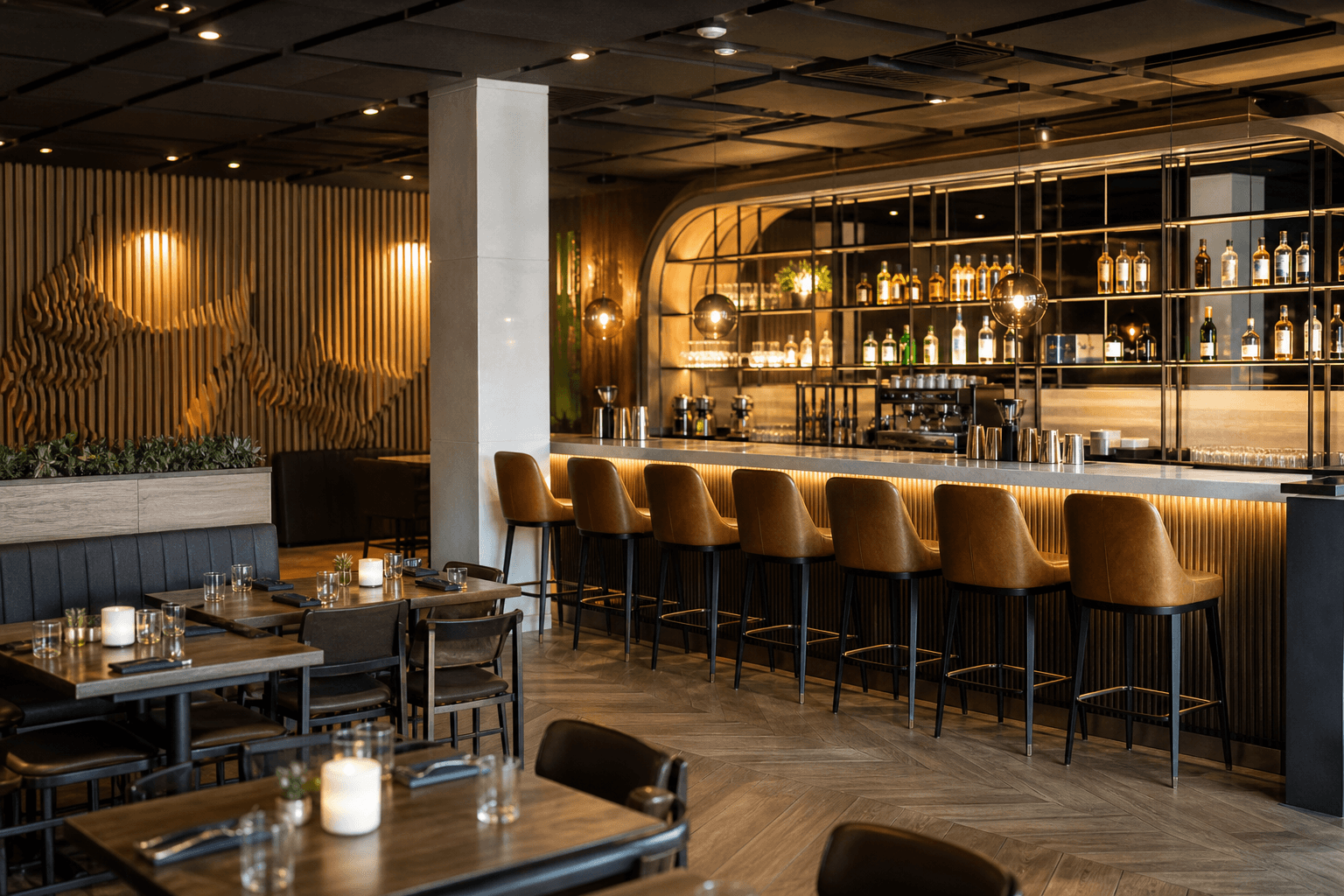
A restaurant owner may want to discuss experience with dining areas, bars, counters, millwork, lighting, feature walls, and finish packages. Deeroi Constructions describes commercial capabilities across these areas and serves restaurants, retail spaces, banks, offices, schools, and training centres. Its commercial construction services provide useful context for comparing your requirements.
Relevant examples do not guarantee a particular result, but they give you a stronger basis for questions. A portfolio should help you assess fit, not simply create a favourable impression.
2. Treating trade coordination as someone else’s problem

Commercial projects often bring several trades and finish elements together. If responsibilities are unclear, decisions may be delayed and gaps can appear between one part of the scope and the next.
Ask who will coordinate the trades, plan the work sequence, resolve conflicts, track decisions, and manage execution through completion. Also ask how updates will be handled when site conditions or project information change.
A full-service commercial contractor should explain its role in pricing, planning, trade coordination, and project management. That does not mean every trade is performed in-house. The important question is whether one accountable team manages the construction path and identifies handoffs clearly.
This matters particularly for restaurant build-outs and spaces with connected interior elements. Bars, counters, millwork, lighting, and finish packages should be considered as part of an overall plan.
3. Accepting a quote without a clear scope
A quote is difficult to evaluate if the scope is vague. Missing finish details, unclear allowances, undefined exclusions, or assumptions about material supply can make two apparently similar quotes represent very different work.
Ask each contractor to clarify what is included. Discuss demolition where applicable, construction work, millwork and cabinetry, lighting, counters, finishes, coordination, and owner responsibilities. If drawings or specifications are available, provide them early and ask how they will inform the estimate.
The address, intended scope, deadline, existing information, and finish expectations establish a more useful starting point. Deeroi’s commercial build-out comparison checklist offers additional context for reviewing scope and contractor fit.
A clear scope does not eliminate every possible change. It makes it easier to distinguish a genuine change from work that was unclear from the beginning.
4. Treating code-conscious planning as an afterthought
Commercial construction should be planned with project requirements in view from the beginning. Leaving important questions until work is underway can create uncertainty about responsibilities, documentation, coordination, or the professionals who need to be involved.
Ask how requirements will be incorporated into planning and how relevant trades will be coordinated. Ask which questions need confirmation from qualified design, engineering, inspection, or approval professionals. The discussion should identify what is known, what remains to be confirmed, and who owns each next step.
Deeroi describes its office and institutional work as code-conscious, clean, and durable. Treat that as a planning priority to discuss, not a promise that every approval or compliance outcome is guaranteed. Specific requirements depend on project details and should be addressed with the appropriate professionals.
5. Judging finish quality from promises instead of evidence
Words such as premium and high quality are easy to include in a proposal. Completed work gives you something more concrete to examine. Review photographs and case studies for details relevant to your project, including cabinetry, millwork, counters, lighting, feature walls, tile, transitions, and overall cleanliness.
Look beyond the most attractive image. Ask whether the portfolio includes projects with a similar level of detail and which parts of the work were included in the contractor’s scope.
Deeroi’s portfolio includes restaurant build-outs, a bank renovation, retail and institutional projects, and residential work. Its portfolio of completed projects can help you assess whether the visible finish quality and project types align with your plans.
6. Comparing only the lowest price
Price matters, but the lowest headline number is not necessarily the most useful offer. A quote may be lower because it excludes coordination, uses different finish assumptions, leaves owner-supplied items undefined, or addresses less detail than another proposal.
Compare the assumptions behind each quote. Check the scope, exclusions, allowances, finish package, trade responsibilities, planning detail, and information still needed before the work can be finalized.
Commercial projects are priced according to their defined scope. Deeroi uses custom, quote-based pricing rather than published flat-rate pricing, so a meaningful construction estimate requires project information and scoping first.
The best comparison is not simply the lowest amount. It is the proposal that clearly explains what you are buying, what remains uncertain, and how the contractor plans to deliver it.
7. Leaving communication and next steps vague
Before awarding the work, ask who your main contact will be, how decisions will be recorded, how updates will be shared, and how questions or scope changes will be raised.
Also ask what information the contractor needs to prepare pricing, when missing details will be identified, and how the project moves from estimate to planning and execution.
Deeroi’s intake begins with the project address, scope, and deadline. Its process then involves pricing the work, planning the project, coordinating trades, and managing execution through completion. You can discuss these details when you request a commercial construction quote.
How to use these seven checks before requesting a quote
Start by defining the project in practical terms. Note the address, space type, intended work, target deadline, operating constraints, and finishes or features that matter most. Gather drawings, specifications, photographs, or landlord information if available.
Shortlist contractors with relevant commercial experience. Review their completed work, ask how they coordinate trades, and confirm that their services match the project.
Give each contractor the same core information and compare proposals by inclusions, exclusions, assumptions, finish details, planning, coordination, and communication. Choose the team whose experience, scope understanding, and process fit the project.
Frequently asked questions
What should a GTA commercial contractor portfolio show?
It should show completed work resembling your space, project complexity, finish expectations, or operational setting. Ask what portion of each project was included in the contractor’s scope.
What should I prepare before requesting a commercial construction estimate?
Prepare the project address, intended scope, target deadline, drawings or specifications if available, operating constraints, and desired finishes. Photographs can also help explain the existing space.
Why should restaurant owners ask about integrated interiors?
Restaurant projects can involve connected elements such as bars, counters, millwork, lighting, feature walls, and finish packages. Ask how these components will be planned and coordinated together.
What does a full-service commercial contractor handle?
Ask how the contractor manages the project, rather than whether every trade is performed in-house. A full-service approach may include pricing, planning, trade coordination, and execution management. Confirm responsibilities and handoffs before selecting a contractor.
Conclusion: choose the contractor with the clearest fit
A sound commercial contractor comparison looks beyond a website description or low initial price. Check relevant experience, coordinated trade management, a defined scope, code-conscious planning, visible finish quality, transparent quote assumptions, and clear communication.
For restaurants, retail spaces, banks, offices, schools, and training centres across the GTA, these checks can turn a broad search into a practical shortlist. Review completed work, prepare consistent project information, and ask how the work will move from pricing to completion.
Deeroi Constructions provides commercial construction and renovation services across the GTA and Ontario. To begin a quote discussion, provide the project address, scope, and deadline through the Deeroi Constructions quote page.