A bathroom renovations contractor is a licensed building professional who coordinates demolition, waterproofing, plumbing, electrical, tile, and finishing to deliver a code-compliant remodel. In ON and across the GTA, Deeroi Constructions manages trades end to end, protects schedules, and delivers clean finishes—so your new bathroom looks great and works flawlessly every day.
By Deeroi Constructions
Last updated: 2026-06-16
Start Here: Plan Your Bathroom Renovation
Start your bathroom project by defining use, must-haves, and constraints, then hire a qualified bathroom renovations contractor to coordinate trades and code. A clear scope, site photos, and a target deadline let a contractor price accurately, align trades, and map a reliable path from demo to a finished, durable space.
Renovating a bathroom touches structure, plumbing, electrical, ventilation, and finishes. A strong plan prevents rework and keeps your home livable during construction. Below is a quick table of contents to help you jump to what you need most.
- What a contractor actually does
- Why hiring the right pro matters
- How the process works
- Project types and approaches
- Best practices that protect your investment
- Tools, checklists, and resources
- Case studies and real examples
- FAQ
Quick Summary
Bathroom renovations succeed when scope is clear, waterproofing is meticulous, and trades are tightly coordinated. Deeroi Constructions in ON delivers code-conscious work, on a defined timeline, with finish quality proven in our portfolio. Expect structured planning, documented milestones, and a clean handover with photos and warranties.
Here’s your at-a-glance overview of how we guide homeowners through a bath remodel in ON and across the GTA.
- Scope & intent: Who uses the room, daily routines, accessibility, storage, and maintenance goals.
- Code & safety: GFCI protection, ventilation, moisture control, and clearances for fixtures.
- Waterproofing: Continuous membranes, proper overlaps, and a 1/4 in. per foot shower slope.
- Durable finishes: Large-format porcelain, slab quartz, and moisture-resistant cabinetry.
- Clean handover: Photos, manuals, maintenance guides, and a punch-free space.
Local considerations for ON
- Plan for humidity swings. Prioritize robust ventilation and continuous waterproofing to handle seasonal changes common across ON.
- Book trades ahead of peak periods. Summer and early fall often see fuller schedules; early planning helps secure preferred dates.
- Account for mixed-use homes. Many ON households combine home and work; build storage and power plans that suit multi-purpose routines.
What Is a Bathroom Renovations Contractor?
A bathroom renovations contractor manages every phase of your bath remodel—design intent, demolition, framing, plumbing, electrical, waterproofing, tile, fixtures, and paint—ensuring code compliance and finish quality. They coordinate licensed trades, sequence the work, mitigate risk, and hand over a clean, fully functional space.
On paper, a bathroom involves “just another room.” In practice, it’s your home’s most complex square footage. Water, electricity, and heat interact in tight quarters. That’s why homeowners choose a bathroom renovations contractor instead of juggling separate subs themselves.
What Deeroi Constructions covers
- Planning & estimating: You bring the address, scope, and deadline; we price the work and map the build.
- Trade coordination: Licensed plumbing and electrical, certified waterproofing, skilled tile setters, finish carpentry, and painters.
- Code-conscious execution: Proper circuits, protected outlets, balanced ventilation, and durable moisture defenses.
- Finish packages: Tile installation, vanities, glass shower enclosures, lighting, mirrors, and hardware alignment.
- Quality documentation: Progress photos, milestone checklists, and a thorough final walkthrough.
Self-contained answer: A specialist contractor is your risk manager. They reduce rework, prevent leaks with continuous waterproofing, and keep schedules realistic by sequencing tasks. Homeowners in ON often value this single point of accountability more than any single product choice.
Why Choosing the Right Pro Matters
The right contractor safeguards structure, prevents moisture failures, and delivers a bathroom that performs for years. Poor sequencing or weak waterproofing leads to leaks, mold, and premature repairs. A vetted pro aligns code, materials, and trades into one reliable plan.
Bathrooms fail quietly at first—elastic grout joints, fogged mirrors from poor ventilation, or minor sealant gaps. Left unresolved, small issues become systemic. Selecting a bathroom renovations contractor with waterproofing expertise and disciplined coordination stops these failures at the source.
Signals you’ve found the right partner
- Portfolio proof: Before-and-after photos, detail shots at corners, drains, and niches, and examples of glass installs.
- Process clarity: A written sequence from demo to handover, with specific inspection points.
- Trade roster: Named, licensed subs for plumbing and electrical, plus trained installers for membranes and large-format tile.
- Moisture-first thinking: Membranes behind/under tile, sealed penetrations, and a continuous vapor path to the fan.
- Cleaning plan: Dust containment, daily tidy-ups, and surface protection from day one.
In our experience across ON, homeowners who evaluate these signals upfront end up with fewer punch items, fewer callbacks, and measurably better finishes.
How Bathroom Renovations Work (Step by Step)
Bathroom renovations follow a defined sequence: planning and protection, demolition, rough-ins, waterproofing, tile and trim, fixtures, glass, and punch. Each step has documented checks so issues are surfaced early—long before they can compromise the final finish.
Here’s the sequence we use on typical ON projects—simple, predictable, and built to reduce rework.
- Scope & site prep: Photos, measurements, fixture list, and dust containment.
- Selective demolition: Careful removal with material recycling where practical.
- Framing & substrate: Plumb, flat, square; blocking for vanities, accessories, and glass.
- Rough plumbing: Supply/vent adjustments, shower valve height, and pressure checks.
- Electrical rough-in: Dedicated circuits as required, GFCI protection, lighting layout.
- Ventilation path: Proper duct sizing, sealed joints, and a short, direct run.
- Waterproofing: Sheet or liquid membrane on wet walls and pan, sealed penetrations, and flood tests where applicable.
- Tile, stone, or panel: Flat substrates, proper thinset coverage, lippage control, and movement joints.
- Fixtures & trim: Vanities, toilets, mirrors, lights, and aligned hardware.
- Glass & sealants: Measured after tile set, with clean silicone at change-of-plane joints.
- Clean & handover: Punch list, manuals, maintenance tips, and photos.
Many issues trace back to rushing steps 3–7. We never do. Substrates are flattened before tile, and membranes are verified at corners, seams, and penetrations to maintain a continuous waterproof barrier.
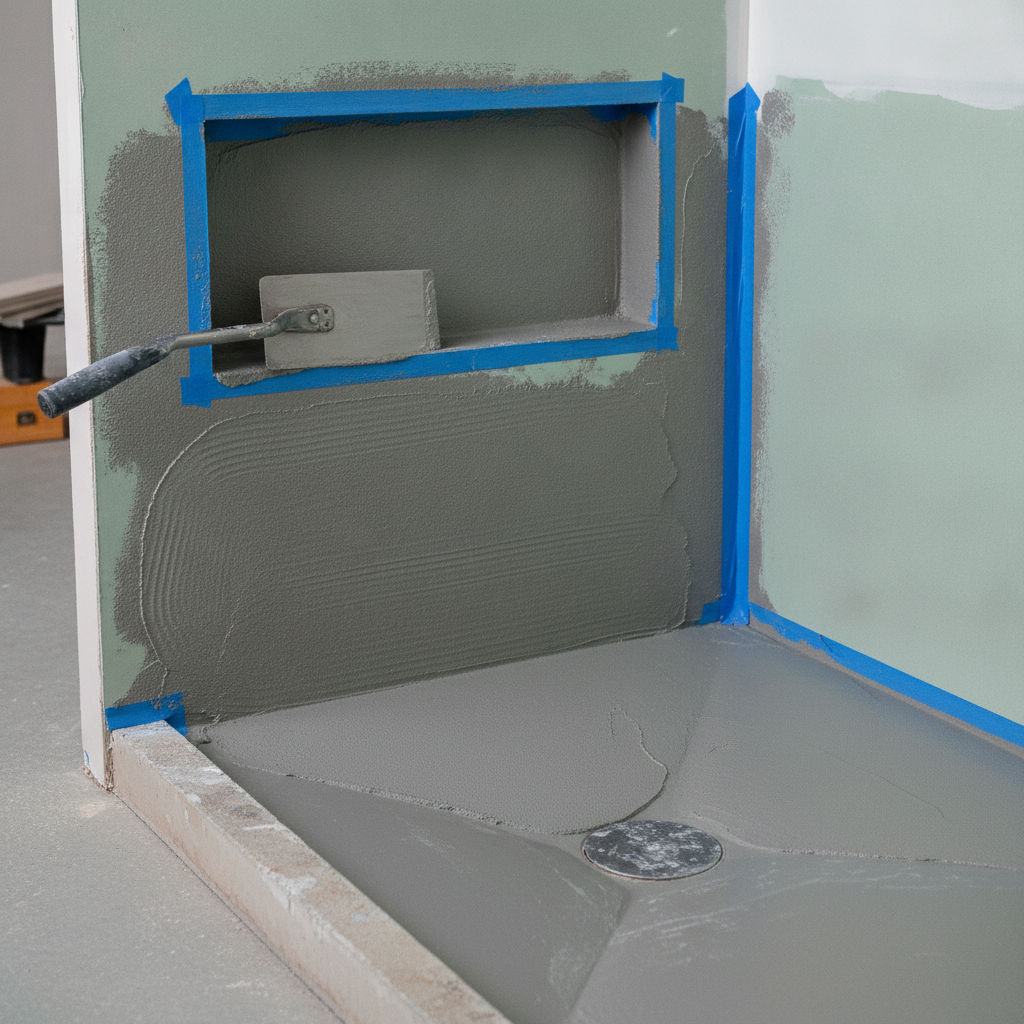
Waterproofing details deserve a closer look. Corners get banding, seams are overlapped per membrane specs, and shower floors are sloped at about 1/4 in. per foot to move water to the drain. We document these checkpoints with photos before hiding them behind tile.
Project Types, Methods, and Approaches
Bathroom projects range from refreshes to gut remodels. Methods vary—curbless showers, prefabricated pans, or fully built mortar beds. The best approach fits your space, accessibility needs, and desired maintenance profile while protecting structure and keeping moisture where it belongs.
Common project types
- Refresh: New vanity, faucets, lighting, and paint while keeping layout intact.
- Layout upgrade: Move drains or supply lines for better flow and storage.
- Gut-to-studs remodel: Rebuild substrates, rewire, reinsulate, and fully re-waterproof.
- Primary suite build-out: Larger shower, double vanity, improved ventilation, and layered lighting.
Wet-area methods
- Curbless showers: Recessed floor or tapered substrates for seamless entry; plan drainage and glass carefully.
- Prefabricated pans: Fast and consistent; follow manufacturer’s membrane tie-in details precisely.
- Mortar beds: Custom slopes for odd shapes; verify cure times and membrane compatibility.
Finish strategies
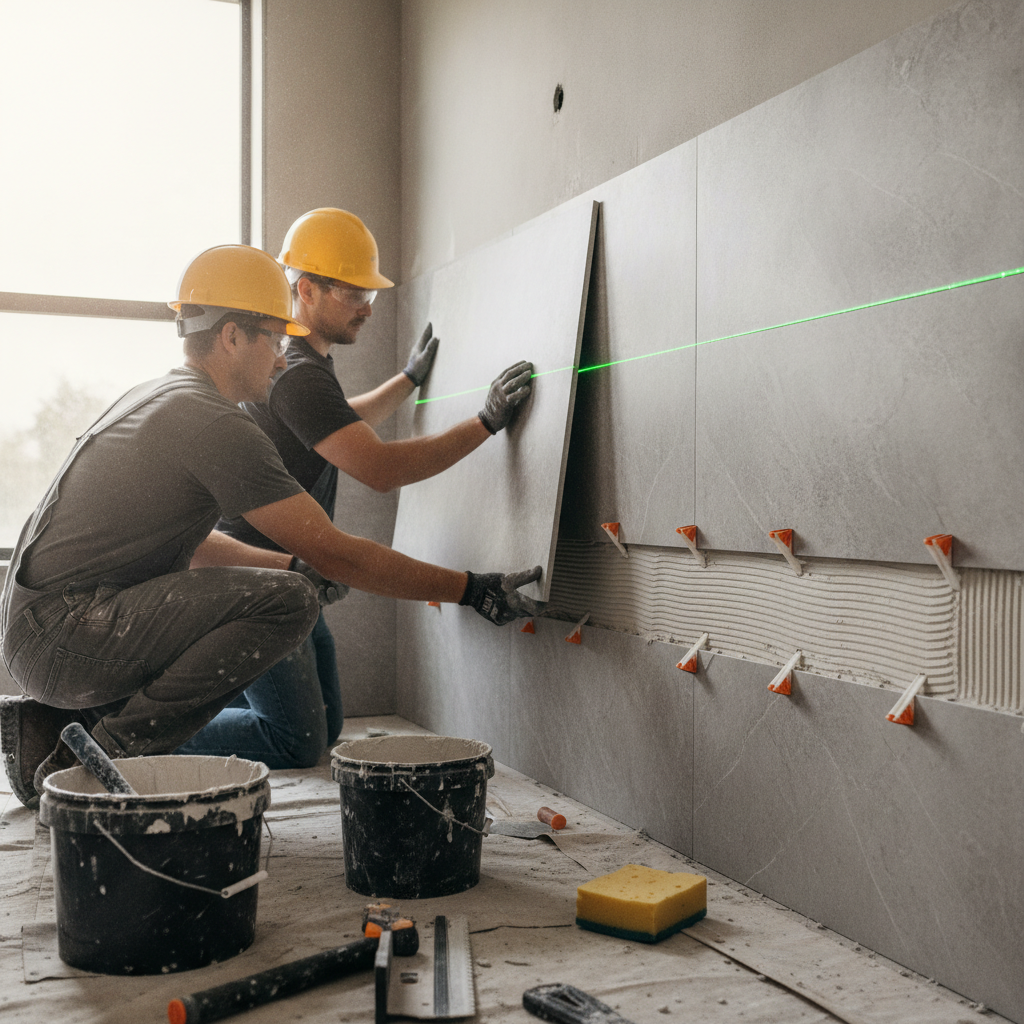
- Large-format porcelain: Fewer grout lines and easier upkeep; ensure ultra-flat substrates and leveling systems.
- Quartz/solid-surface tops: Durable, low maintenance, clean edges around undermount sinks.
- Glass shower installation: Tempered glass measured after tile; hinges set to carry weight without sag.
Self-contained answer: Choose the simplest method that reliably achieves waterproofing and usability in your space. Complexity only helps when it meaningfully improves access, cleaning, or longevity.
Best Practices That Protect Your Investment
Prioritize continuous waterproofing, balanced ventilation, and safe electrical layouts. Keep substrates flat and square, slope wet areas correctly, and document hidden work. These practices reduce callbacks, extend finish life, and make cleaning and maintenance much easier.
Waterproofing and moisture control
- Continuous membranes: Cover all shower walls and the floor; seal penetrations and niches.
- Pan slope: Target roughly 1/4 in. per foot toward the drain for efficient water movement.
- Ventilation: Short, direct duct runs; properly sealed joints and an exterior termination.
Electrical safety and lighting
- Protection: GFCI-protected outlets and appropriate circuits as required by code.
- Layered lighting: Task lighting at the mirror plus ambient and, if desired, accent lighting.
- Switch locations: Keep switches reachable and dry, with clear paths for hands.
Layout clearances
- Toilet front clearance: Aim for about 24 in. of free space in front of the bowl; more feels better.
- Vanity access: Ensure drawers and doors open without hitting walls or glass.
- Glass swing: Plan shower door swings to avoid towel bars or vanities.
We treat these as non-negotiables. They are the difference between a bathroom that merely looks new and one that performs new—day in, day out.
Tools, Checklists, and Helpful Resources
Use a simple checklist: scope, measurements, fixture list, site photos, and a target deadline. Add a drawing or annotated photo with dimensions. With this packet, a contractor can price quickly, confirm code items, and schedule trades without delays.
Here are resources homeowners often find helpful when gathering ideas or understanding the sequence of work. We like resources that explain practical plumbing considerations, common pitfalls in older baths, and upgrade ideas that stand the test of time.
- Practical plumbing sequence explained in this bathroom renovation plumbing guide.
- Typical pitfalls called out in this old bathroom renovation overview.
- Idea starter list in this roundup of bathroom upgrades you can pair with a remodel.
Note: We share resources for context. Your home, codes, and scope are unique—use them as idea starters, then align decisions with your contractor’s plan.
Who Should Do What? (Comparison)
For waterproof, long-lasting results, a licensed contractor coordinates all trades. Specialty installers add expertise on finishes, and DIY fits only small cosmetic tasks. Compare roles by risk, schedule control, and warranty before you decide who leads the work.
| Aspect | General Contractor | Specialty Installer | DIY |
|---|---|---|---|
| Waterproofing quality | Verified membranes and flood tests where applicable | Strong in specific systems | Varies; high risk of misses |
| Schedule control | Full sequencing across trades | Limited to scope | Uncertain timelines |
| Code & inspections | Coordinates and documents | Usually outside scope | Homeowner responsibility |
| Warranty | Single point of accountability | Product-limited | None |
| Finish alignment | Manages tile, glass, lighting, paint | Finish-specific | Challenging to coordinate |
Self-contained answer: If your scope includes wet-area work, electrical, ventilation, and glass, choose a seasoned bathroom renovations contractor to lead. The value is in coordination, not just installation.
Case Studies and Real Examples
Look for bathrooms with detailed membrane work, flat tile planes, and clean glass installs. Strong case studies show corners, niches, and transitions up close—where finish quality is earned. Deeroi’s portfolio illustrates these details across homes in ON and the GTA.
We believe in portfolio-first trust. That’s why our site shows real project photography and short write-ups. Here are representative examples to explore:
- Premium stonework and meticulous glass in our marble washroom upgrade.
- A whole-home context that complements bath finishes in the Vaughan house upgrade.
- High-craft cabinetry and finishes that inform bath style in the kitchen upgrade project.
- Custom detailing you’d expect in a new build, shown in our Caledon custom residence.
For commercial precision that carries back to homes, see our restaurant interiors, including the Etobicoke restaurant build-out. The discipline in millwork, lighting, and finish sequences is the same—and it shows in our residential bathrooms.
Thinking about next steps? Visit our renovations page to share your address, scope, and deadline. We’ll price the work, plan the trades, and map a clear path to your finished bathroom.
How to Choose a Bathroom Renovations Contractor
Interview 2–3 contractors. Review portfolio details, ask about membrane systems, electrical and ventilation plans, and how they document hidden work. Require a written sequence and named trades. Choose the pro whose process and finish quality you trust—not just the fastest promise.
What to look for in proposals
- Scope clarity: Inclusions, exclusions, and a written work sequence.
- Membrane brand & method: Sheet vs. liquid, overlap details, and verification steps.
- Tile plan: Substrate prep, layout drawings, grout type, and movement joints.
- Electrical & ventilation: Circuit protection, fan sizing, duct run, and termination location.
- Documentation: Photos of framing, rough-ins, and waterproofing before finishes.
Cross-compare proposals by method, not just timelines. A realistic plan with documented checks consistently produces better bathrooms than aggressive schedules with vague details.
How Deeroi Constructions Works (Our Playbook)
Bring your address, scope, and deadline. We price, schedule trades, and run a code-conscious sequence with documented checkpoints. You get a clean, durable bathroom, photographed at each stage, and a tidy handover that makes maintenance simple.
- 1. Intake: We review your scope packet—photos, dimensions, fixture list, and target date.
- 2. Plan: Sequence demo, rough-ins, waterproofing, tile, fixtures, glass, and paint.
- 3. Execute: Coordinate licensed subs, protect your home, and keep communication tight.
- 4. Handover: Deliver a clean bathroom with photos, manuals, and a simple maintenance plan.
We apply the same discipline from our commercial interiors to residential bathrooms. For a taste of that approach, explore our restaurant build-outs insights.
Frequently Asked Questions
Homeowners often ask about timelines, living through renovations, and material choices. Here are crisp answers to help you plan with confidence. For project-specific guidance in ON, we’re happy to review your scope and photos.
How do I prepare my home for a bathroom renovation?
Clear the room, empty adjacent storage, and photograph existing conditions. Share dimensions, fixture preferences, and timing goals. We protect floors and pathways, set up dust control, and map a sequence so your home stays tidy and safe during work.
What makes a shower truly waterproof?
A continuous membrane ties walls to the pan, corners are banded, penetrations are sealed, and the floor slopes about 1/4 in. per foot to the drain. We document membrane coverage with photos before tile is installed.
Can I stay in my home during the renovation?
Yes, most homeowners do. We establish dust containment, daily cleanup, and a communication plan. If you have only one bath, we plan fixture shutdowns and coordinate access windows so daily life remains manageable.
How do I compare contractor proposals?
Compare methods and milestones, not just dates. Look for membrane brand and overlap details, substrate prep steps, electrical and ventilation plans, and photo documentation. The clearest sequence with verified checkpoints usually wins on quality and predictability.
Key Takeaways
Successful bathroom renovations hinge on planning, waterproofing, and coordination. Choose a contractor who documents hidden work, keeps substrates flat and square, and hands over a clean, well-ventilated space. That’s how you get performance, not just pretty pictures.
- Define scope with photos, dimensions, and a target deadline.
- Hire for process depth—membranes, sequencing, and documentation.
- Favor durable, low-maintenance finishes for daily use.
- Expect tidy sites, clear communication, and a documented handover.
Related Topics to Explore
Great bathrooms connect to the rest of your home. Explore kitchens, whole-home upgrades, and custom builds to align style and function. Reviewing adjacent spaces helps lock in a cohesive design language that will age well.
See how material choices carry across rooms in our kitchen upgrade project and how new-build craftsmanship informs remodels in the Caledon custom residence. For finish discipline from commercial interiors that elevates home work, browse the Etobicoke restaurant build-out.