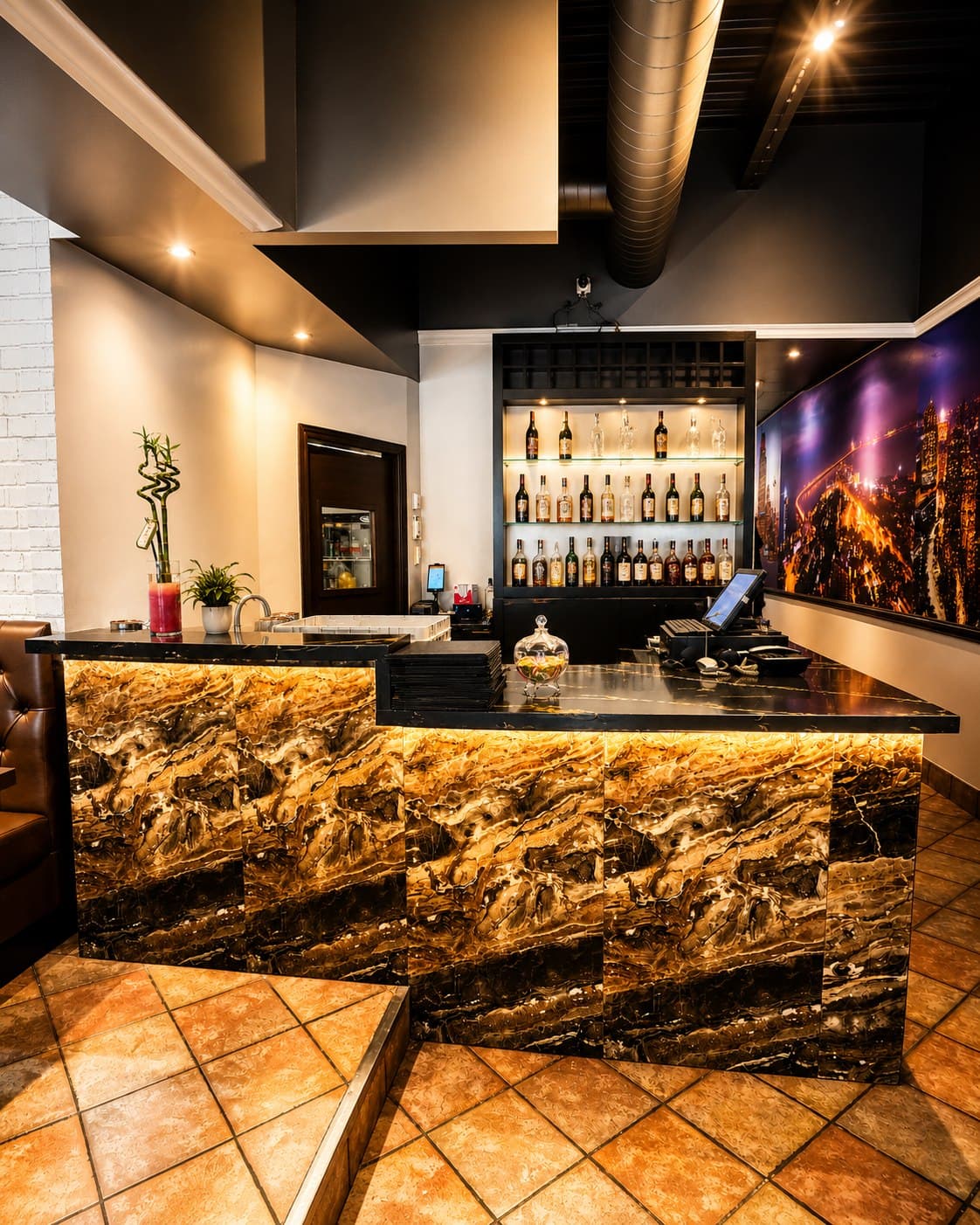

7 checks every restaurant owner should make before hiring a restaurant contractor
How to use this checklist during contractor interviews
This article lists seven specific red flags, each followed by why the issue matters for restaurant build-outs and two tactical verification steps you can use on-site or on a call. Bring these prompts to every walkthrough and write the contractor responses in the margin. If you want a ready-made handout, use the one-page interview checklist titled "7 Questions to Ask a Restaurant Contractor" when you meet bidders or supply your project address, scope, and deadline to get a scoped quote. Deeroi Constructions offers turnkey restaurant build outs and portfolio examples you can compare to the answers you receive.
1. They skip technical questions about hood, grease interceptor, and equipment routing
Why it matters
Hoods, exhaust, ductwork, make-up air and grease interceptors create major scope and cost risk if not checked early. A contractor who guesses on these items will likely produce change orders later. Industry advice stresses that the most useful filter is the questions the contractor asks back about hood size, interceptor access and the equipment list, because those questions protect owners from surprise costs and delays as noted in a Toronto build-out guide.
Tactical verifications
- Ask the contractor to walk the equipment list with you and name the mechanical trades they will schedule for hood, fan, ductwork and grease management. Record the trade contacts and expected sequencing.
- Request photos or a short case note showing prior hood integration and grease interceptor connections on a similar project, and ask whether they reviewed the landlord work-letter or lease conditions for your site.
Decision criteria, yes or no: did the contractor ask clarifying questions back about hood dimensions, make-up air capacity, exhaust fan locations and interceptor access? If no, treat the estimate as a guess and push for a site-specific mechanical scope before you sign.
2. No clear project manager, milestones, or communication plan

Why it matters
Restaurant build-outs require tight sequencing of trades and milestone dates if you want to open on time. Project management capability is one of the most important evaluation points, and you should expect a named project manager, a schedule of milestones and a reporting cadence during the sales process according to build-out best practices.
Tactical verifications
- Ask who will be the dedicated project manager and request a sample project schedule with milestones and reporting cadence. Ask how delays are communicated and who is your single point of contact.
- Request the contractor's change order and communication protocol, including the form or process used to approve extra work, and examples of weekly reports or site meeting minutes.
Decision criteria: the contractor names a PM, produces a milestone schedule and explains how they will deliver progress updates. If they cannot, consider another bidder with a documented plan.
3. Vague or defensive answers on change orders and pricing detail
Why it matters
Change orders are the most common cause of budget overruns on restaurant projects. Contractors who give vague answers about allowances, hourly rates or approval gates create avoidable risk. A clear, written change-order workflow reduces disputes and keeps costs predictable and is recommended for Toronto projects.
Tactical verifications
- Ask to see their standard change order form and an anonymized example of a recent change order with the final reconciliation. Look for fields that record the cause, scope change, cost, and approvals.
- Ask how allowances and contingencies are handled, and whether rates for extra trades and overtime are pre-agreed. Request a written example of how a disputed cost was resolved.
Decision criteria: the contractor provides a written change-order workflow with approval gates and can explain a past change-order resolution in plain language. If they dodge specifics, assume change-order risk will transfer to you.
4. Cannot provide verifiable restaurant references or a photo-backed portfolio
Why it matters
Finish quality, millwork integration, counters and lighting are best judged by comparable projects. Speaking with past restaurant clients reveals whether the contractor met milestones and fixed snags professionally and is a standard vetting step. A photo-backed portfolio mitigates uncertainty about finish outcomes.
Tactical verifications
- Request three recent restaurant references with contact phone numbers and permission to call. Ask each reference about schedule adherence, communication quality and how open items were resolved.
- Ask for photographs and scopes for comparable build-outs, including tenant-work letters or landlord conditions they managed. Use Deeroi Constructions' restaurant portfolio as an example of the level of documentation to request restaurant build outs.
Decision criteria: the contractor supplies reachable references and a photo portfolio that shows similar millwork and equipment coordination. If references are missing or screened, remove the bidder from your shortlist.
5. Unwilling to share insurance, WSIB coverage, or basic financial history

Why it matters
Inadequate insurance or unclear financials increase the risk of delays, liens or incomplete work. Asking for proof of coverage and WSIB compliance is part of standard due diligence when hiring builders and should not be negotiable.
Tactical verifications
- Request a current certificate of insurance that shows commercial general liability limits and lists the owner or landlord as additional insured where required. Note the policy expiry date and insurer name.
- Ask for evidence of WSIB compliance or equivalent provincial coverage and a brief statement of business history, including how long the firm has been delivering restaurant builds.
Decision criteria: the contractor provides current insurance proof and WSIB documentation. If they resist sharing these items, escalate checks or remove them from the running.
6. Unclear ownership of permits, inspections, and code responsibilities
Why it matters
Misaligned expectations about who pulls permits or arranges inspections causes delays and compliance risk. A contractor should be able to list required permits and explain who applies and pays for each one, and to show experience navigating municipal inspections in Ontario as part of basic vetting.
Tactical verifications
- Ask the contractor to list the permits needed for your scope and clarify who will apply, pay and track each permit. Confirm whether they will attend inspections or coordinate trade sign-offs.
- Request examples where the contractor managed municipal filings or inspections in the GTA, and ask how they scheduled trade inspections to avoid rework.
Decision criteria: the contractor clearly states permit responsibilities up front and demonstrates prior experience managing municipal filings and inspections in Ontario. If responsibility is fuzzy, clarify in writing before awarding the contract.
7. No formal deficiency punchlist or holdback procedure before final payment
Why it matters
Without a formal deficiency process and an agreed holdback plan, owners lose leverage to get incomplete or incorrect work corrected. Best practice is a documented punchlist and a warranty period, with a clear holdback and sign-off workflow before the final payment as recommended by industry advisors.
Tactical verifications
- Ask how deficiencies are documented, corrected and signed off. Request to see their standard punchlist form and the typical warranty period for finished work.
- Ask how they treat the final holdback and whether there is a clear process to close out deficiencies before release. Request an example of a holdback release checklist.
Decision criteria: the contractor has a written punchlist workflow and accepts a formal holdback and deficiency correction steps. If they are evasive about holdback or punchlist procedures, treat this as a major red flag.
Frequently asked questions
What should I ask about hood and grease interceptor integration during a contractor walkthrough?
Ask the contractor to confirm hood dimensions, required exhaust fan capacity, make-up air strategy, roof or wall penetration routing, and grease interceptor location and access. Request that they review your equipment list on-site and name the mechanical trades they will schedule.
How do I confirm a contractor's change order process before signing?
Ask to see their standard change order form and an anonymized example. Confirm who approves change orders, what timing triggers a change order, and whether hourly or unit rates for extra work are pre-agreed in writing.
Who typically pulls permits for a restaurant build-out in the GTA, and how do I verify it?
Either the contractor or a retained consultant usually applies for permits, depending on the contract terms. Ask the contractor to list required permits, specify who will apply and pay, and provide examples of previous municipal filings they handled.
What insurance and proof should I request to confirm a contractor is properly covered?
Request a current certificate of insurance showing commercial general liability limits and policy expiry date. If required by your landlord or insurer, ask to be named as additional insured. Also request WSIB compliance documentation or the provincial equivalent.
Final step, a simple decision rule: if a contractor answers these questions with clear documentation, named contacts and prior project examples, they remain on your shortlist. If they are evasive on two or more items, treat that as a disqualifier.
Ready to compare answers with a local turnkey builder? View Deeroi Constructions' restaurant portfolio and service details, or bring your address, scope and deadline to request a scoped quote at Deeroi Constructions.